

article by Samuel Reiman via foxsports.com
Formula One racer and Mercedes driver Lewis Hamilton cruised to his seventh win of the season on Sunday at the United States Grand Prix at Circuit of The Americas in Austin, TX. He now sits 26 points back of his teammate Nico Rosberg. This is his fourth win in five starts at CoTA and the 50th of his career.
The Brit started from pole position and beat Rosberg into the first corner. He never looked back. Rosberg, meanwhile, had a more eventful race, as he lost second spot to Red Bull Racing’s Daniel Ricciardo in Turn 1. Rosberg wasn’t able to get the spot back until the middle of the race under a Virtual Safety Car period.
The Virtual Safety Car had been deployed after Red Bull Racing’s Max Verstappen had parked his car with a mechanical issue on track. This hurt Ricciardo as he had already pit ahead of the Virtual Safety Car period, while both Mercedes drivers had yet to make their second stop and so were able to pit without losing too much time.
Verstappen had already been having a race to forget, as he had came into the pits not too long before his retirement, mistakenly thinking the team had called him in. They hadn’t, and so were not prepared for his stop, costing the Dutch racing driver a lot of time.
Ferrari’s Kimi Raikkonen also hit trouble in the pits. The Finn was trying to make a three-stop strategy work, and it was going well. He was running fourth when he came into the pits for his final stop of the day, but was released when the right-rear wheel gun was still attached. His wheel was not bolted on correctly, and Raikkonen was forced to park the car on pit exit. Ferrari is being investigated for releasing Raikkonen’s car in an unsafe condition.
While Hamilton led Rosberg and Ricciardo over the line, it was Ferrari’s Sebastian Vettel placing in fourth behind them. Behind him was the McLaren of Fernando Alonso, who muscled his way by Toro Rosso’s Carlos Sainz and Williams driver Felipe Massa, in which there was contact involved, in the closing laps of the race. Sainz placed sixth while Massa placed seventh. Sergio Perez placed eighth for Force India ahead of Jenson Button in ninth, meaning both McLarens scored points. Romain Grosjean rounded out the points in 10th, scoring a point in the team’s first race on home soil and in his 100th start. The collision between Alonso and Massa will be investigated after the race.
To read more, go to: http://www.foxsports.com/motor/story/f1-us-gp-race-results-recap-austin-texas-lewis-hamilton-mercedes-wins-102316
Posts published in “International”

article by Fumnanya Agbugah via venturesafrica.com
Global children’s charity Theirworld and Oando Foundation, an independent charity organization, have partnered to empower Nigerian girls and young women. This initiative is geared towards providing them with a unique opportunity to learn important technology skills in a safe environment through an innovative pilot project known as Code Clubs.
“With a safe space to learn and play, a mentor to inspire, and access to technology to be able to explore, create, and code we can increase learning opportunities and empower girls to fulfill their potential,” said Sarah Brown, President of Theirworld.
Despite thousands of jobs being created in the Science, Technology, Engineering and Mathematics (STEM) industries across Africa, gender discrimination, lack of access to education and technology have often kept girls out of the work force. This has also made it impossible to break the cycle of poverty.
As a result of the several issues affecting the development of women in Africa, Code Club Nigeria is set to be launched ahead of Africa Code Week in collaboration with the Oando Foundation.
What is the code club?
The Code Club’s are low-cost, sustainable and scalable safe spaces where girls can be empowered by learning to code, foster creative thinking and increase knowledge and skill-set for the future.
Over 600 girls aged six to twenty-five in Nigeria, Kenya, Uganda and Tanzania will join the Code Clubs in its pilot phase with the aim of reaching thousands more with its self-sustaining model – where girls who have completed the course will return to mentor the next cohort of girls, with community support to augment the scalability of the project.
To read full article, go to: http://venturesafrica.com/oando-foundation-and-theirworld-partner-to-empower-nigerian-girls-and-young-women-through-ict/amp/

article by Wilfred Ainsworth via urbangeekz.com
Ride-sharing technology has boomed into a multi-billion dollar industry within the past decade with the biggest names being Uber and Lyft. Now a new platform, led by an innovative chief executive, looks to stake a claim in the global marketplace. Moovn is a ride-hailing app that is currently operating in 7 U.S. cities and has plans to rapidly expand in both western and emerging markets.
Founded by Tanzanian-born Godwin Gabriel, the mobile application also operates in 3 cities in Africa: Johannesburg, South Africa; Nairobi, Kenya; and Gabriel’s home city, Dar-es-salaam, Tanzania. In an interview with UrbanGeekz, Gabriel talks about teaching himself to code and developing the software to launch the platform. Still, he admits his beta launch was “amateurish at best” and states, “It wasn’t until we received investor backing that I was able to hire and collaborate with a team of seasoned developers to transform the platform into what we have today.”
When asked what his biggest challenges are, he says, “The market, for the most part, is currently being dominated by Uber and Lyft with these companies enjoying the benefits of having first mover advantage with the transportation technology space. However, we’re confident that the global market remains sizable enough for all of us to fit in and play.”
 In fact, operating in Africa has been a smart business strategy, particularly with the rise smartphone usage across the continent. It is also a chance to do business in markets that hadn’t been explored by big name brands. “I believe Moovn is changing lives – particularly in Africa and developing markets,” he says. “For instance, drivers earn more on our platform, are reducing idle time and are able to provide and build their communities.”
Gabriel has an impressive track record climbing the ranks of corporate America. He also has an MBA from the University of Washington’s Foster School of Business. Stepping out in faith as a tech entrepreneur, he quickly realized that he had to differentiate his brand to create a competitive transportation technology platform.
Moovn sets itself apart from most ride-sharing applications because it allows the rider to pre-schedule trips up to a month in advance, instead of only being able to request one for immediate service. It also allows different vehicle options depending upon local modes of transportation, such as motorcycles and tricycles in developing economies. Other unique features include the movement of products and services from the marketplace to the consumer and the ability to enable businesses to keep track of their transport logistics.
To read full article, go to: African-American Launches Ride-Sharing App to Compete with Uber, Lyft – UrbanGeekz
Michelle Obama Supports CNN Film "We Will Rise" on Global Education for Girls, Which Premieres Today

article by Michelle Obama via cnn.com
For me, education has never been simply a policy issue — it’s personal.
Neither of my parents and hardly anyone in the neighborhood where I grew up went to college. But thanks to a lot of hard work and plenty of financial aid, I had the opportunity to attend some of the finest universities in this country. That education opened so many doors and gave me the confidence to pursue my ambitions and have a voice in the world.
For me, education was power.
And a few years ago, when I had the honor of meeting Malala Yousafzai, who was shot in the head just for trying to go to school, this issue got really personal for me. I saw that the terrorists who nearly killed her were trying to silence her voice, snuff out her ambitions, and take away her power.
That’s why I decided to work on global girls’ education as first lady: because right now, there are tens of millions of girls like Malala in every corner of the globe who are not in school — girls who are so bright, hardworking and hungry to learn. And that’s really the mission of the Let Girls Learn initiative we launched last year: It’s a global effort to give these girls the education they need to fulfill their potential and lift up their families, communities and countries.
Now, as first lady, I have no budget of my own for programs, and I have no authority to make or pass laws. That’s why, when we first launched Let Girls Learn, many folks doubted that we could make a real impact on this global issue. But over the past year and a half, we’ve established partnerships with some of the world’s largest companies and organizations that are committing money, resources and expertise. We’re collaborating with countries like Canada, Mexico and the Nordic countries on girls’ education efforts. Countries like Japan, South Korea, and the United Kingdom have collectively pledged nearly $600 million.
The United States is investing over a billion dollars through new and ongoing efforts and running Let Girls Learn programs in more than 50 countries. The World Bank Group will be investing $2.5 billion over the next five years. And through social media campaigns, Let Girls Learn has rallied people across America and across the globe to step up and be champions for girls worldwide.
All this is happening because time and again, whether it’s a head of state, a corporate CEO, or a 15-year-old girl here in the United States, when people hear the stories of girls who aren’t in school, they want to help. That’s why CNN’s new film on global girls’ education, “We Will Rise,” airing for the first time this week, is so critically important — because it tells these girls’ stories.
This powerful film chronicles the lives of some of the girls I visited this past summer in Liberia and Morocco, two countries in Africa where many girls struggle to get an education. I was joined in my travels by the actors and activists Meryl Streep and Freida Pinto, who are also passionate about girls’ education, as well as CNN anchor Isha Sesay.
Together, we sat down with girls in both countries to discuss the barriers they face and the dreams they hold for their futures. Like so many girls around the world, many of these girls come from families struggling with poverty. Some endure dangerous commutes to and from school each day. Others face cultural pressures to drop out, marry young and start having children of their own.
But these girls have big plans for their lives. They want to attend college and become doctors, teachers, engineers, entrepreneurs; and day after day, they do whatever it takes to get the education they need to fulfill their dreams. They get up before dawn, and spend hours harvesting crops, cooking for their families and tending to their younger siblings before heading to class. After school, they work as maids and in factories, and they study for hours late into the night.
I hope you will be as moved by their stories as I was — and I hope you’ll visit LetGirlsLearn.gov to learn more about how you can take action to help girls like them worldwide go to school. Unlike so many girls around the world, we have a voice. That’s why, particularly on this year’s International Day of the Girl, I ask that you use yours to help these girls get the education they deserve. They’re counting on us, and I have no intention of letting them down. I plan to keep working on their behalf, not just for the rest of my time as first lady, but for the rest of my life. I hope you will join me.

article by Monique Judge via theroot.com
Colonial history, a legacy of enslavement and segregation are among the chief reasons reparations are owed to African Americans, according to a report put out by a United Nations group (pdf).
The U.N.’s Working Group of Experts on People of African Descent, which reports to the U.N. High Commissioner on Human Rights, presented its findings to the U.N. Human Rights Council on Monday, the Washington Post reports.
The panel, which visited the U.S. on a fact-finding mission in January, wrote in a statement that it was “extremely concerned about the human rights situation of African Americans,” stating that there has been no real commitment to reparations, truth and reconciliation for people of African descent.
Despite substantial changes since the end of the enforcement of Jim Crow and the fight for civil rights, ideology ensuring the domination of one group over another, continues to negatively impact the civil, political, economic, social and cultural rights of African Americans today. The dangerous ideology of white supremacy inhibits social cohesion amongst the US population.
The panel likened the pattern of police officers killing unarmed black men to lynching, which it referred to as a form of “racial terrorism that has contributed to a legacy of racial inequality that the US must address.”
“Contemporary police killings and the trauma it creates are reminiscent of the racial terror lynching of the past. Impunity for state violence has resulted in the current human rights crisis and must be addressed as a matter of urgency,” the panel wrote.
The panel also noted that African Americans are disproportionately affected by “tough on crime policies,” mass incarceration, and racial bias and disparities in the criminal-justice system.
During this country visit, the experts observed the excessive control and supervision targeting all levels of their life. This control since September 2001, has been reinforced by the introduction of the Patriot Act. We heard testimonies from African Americans based on their experience that people of African descent are treated by the State as a dangerous criminal group and face a presumption of guilt rather than innocence.
The panel laid out recommendations for the U.S. to assist in “its efforts to combat all forms of racism, racial discrimination, Afrophobia, and related intolerance,” which included the “profound need to acknowledge that the transatlantic slave trade was a crime against humanity.”
“Past injustices and crimes against African Americans need to be addressed with reparatory justice,” the panel wrote.
To read more, go to: http://www.theroot.com/articles/news/2016/09/u-n-panel-says-the-u-s-owes-black-people-reparations/

article via blackamericaweb.com
Pencils of Promise, a global education nonprofit, has tapped Grammy-nominated rapper Wiz Khalifa to headline its 2016 PoP Gala, joining fellow performers Nico & Vinz, reports Billboard.
Khalifa will close the event — set for Wednesday, Oct. 26, at Cipriani Wall Street — with a special performance in support of the millions of children around the globe who don’t have access to quality education.
“Kids should be able to chase their dream. Pencils of Promise is allowing them to do that,” Khalifa said in a press release announcing his involvement.
This year marks the sixth annual Pencils of Promise Gala to raise funds for children’s education in developing countries. Previous honorees and performers have included Justin Bieber, John Legend, Usher, Gary Vaynerchuk, Malala Yousafzai and Scooter Braun.
Honorary event chair Grace Raymond and creative director Luam Keflezgy are leading the effort to transform the annual event.
The 2016 gala will feature an awards portion, highlighting the partnership with footwear brand Stuart Weitzman, which has supported Pencils of Promise with their Shoes for Schools campaign, through which they funded the construction of three schools: one each in Ghana, Guatemala and Laos. The night will also recognize the Womble Family/Collis Foundation.
To read more, go to: http://blackamericaweb.com/2016/09/27/wiz-khalifa-to-headline-benefit-concert/
article by Erica Schwiegershausen via nymag.com
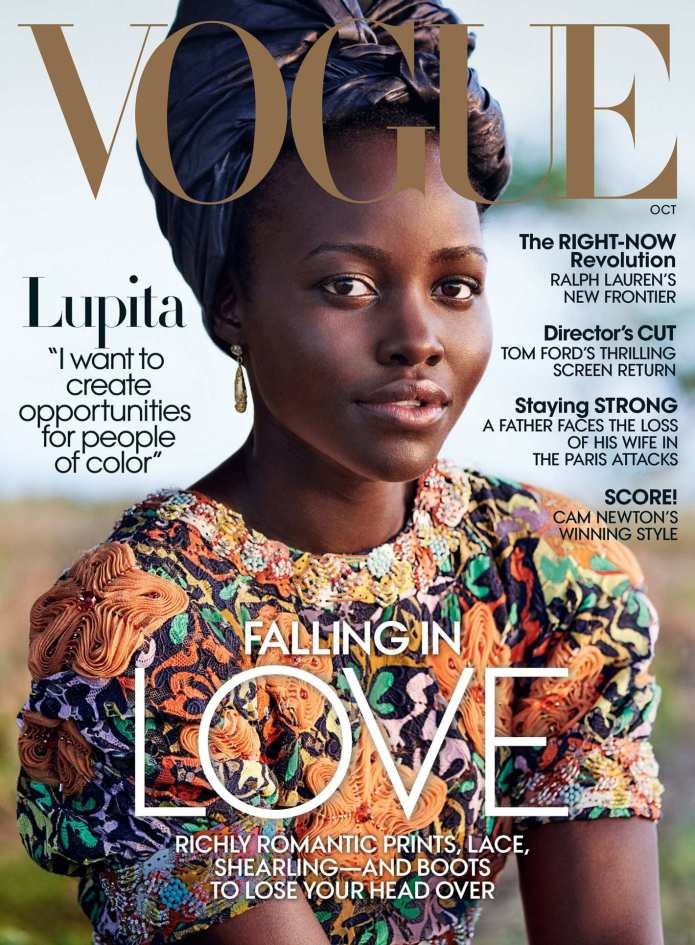
In the October issue of Vogue, three-time cover girl Lupita Nyong’o talks about growing up in Nairobi, and her desire to see more African narratives represented in Hollywood and beyond. “I want to create opportunities for other people of color because I’m fortunate enough to have a platform to do that,” she said.
Recently, Nyong’o starred in “Eclipsed” on Broadway, playing a 15-year-old girl held captive by a rebel officer in Liberia. In her latest film, “Queen of Katwe,” she plays the mother of a Ugandan girl who becomes an international chess master. (The film opens next week.) And she’s also working on the forthcoming film adaptation of Chimamanda Ngozi Adichie’s “Americanah“— a love story that centers around two Nigerians.
“Being able to use my platform to expand and diversify the African voice … I feel very passionate about that. It feels intentional, meaningful,” Nyong’o said. She was drawn to “Queen of Katwe,” she said, because it was “based on a true story, an uplifting story out of Africa.” Nyong’o also reflected — not for the first time — on the significance of seeing darker-skinned women represented and celebrated as beautiful.
“Alek Wek changed how dark people saw themselves,” she said. “That I could do the same in a way for somebody somewhere is amazing.” She added, “The European sense of beauty affects us all. I came home from college in the early two-thousands and saw ads on TV with a girl who can’t get a job. She uses this product. She gets her skin lighter. She gets the job. The lording of lighter skin is a common thing growing up in Nairobi. Being called ‘black mamba.’ The slow burn of recognizing something else is better than you.”
Working on the set of “Queen of Katwe,” Nyong’o said a young Ugandan-British woman came up to her and said: “I’ve never had so many people call me beautiful until you showed up. I get called to auditions I never would have been called to before. I know it’s because you exist.”
Source: Lupita Nyong’o Wants Opportunities for People of Color


article by Hira Humayan, Amanda Sealy, CNN and Phoebe Parke, for CNN via cnn.com
Asnath Mahapa was fascinated by planes as a teenager, little did she know she would break boundaries with them by becoming South Africa’s first African female pilot.
“It just dawned on me that those big things that we see in the skies, someone is actually in charge of them,” she told CNN. “I thought if someone can fly this thing, that means I can also do it.”
Mahapa, whose father didn’t want her to become a pilot, overcame a number of obstacles before she took to the skies. “When I told my father I wanted to become a pilot, he never even entertained the idea, ” she explained.
Challenging route to success
She enrolled in a course in electrical engineering at the University of Cape Town in line with her father’s wishes, only to drop out a year later. She later started flight school, which came with it’s own set of challenges.
“I was the only woman in my class the whole time,” she said. “I had to work very hard. I had to probably work ten times harder than the men that I was with in the classroom.”
Mahapa also felt sick the first few times she took to the skies. But that didn’t stop her. “My first time, I felt sick,” she said. “I was persistent, I went back again, I went back until I stopped feeling sick.”
Her hard work and determination paid off and in 1998 she broke barriers by taking to the skies as the first female African pilot in South Africa.
“I didn’t know I was the first black woman until 2003, until about four years later. And I was still the only one at the time and I did not know,” she said. “Before I knew it I was on TV, front page of newspapers, and that came as a shock because I was still young, I was 22 at the time, I was very young.”
Charting a new course
Mahapa was not content with just breaking barriers, she wanted to train and inspire a new generation of pilots, so in 2012 she opened the African College of Aviation.
“For me, it’s about trying to help women who aspire to become pilots,” she said. “I still see a lot of black women going through the same things that I went through at that time. They still struggle to get jobs after they qualify.
“Most of them they struggle with finances because it’s a very expensive industry.” In addition to cost, according to Mahapa the field is still very male dominated, something she is committed to change.
To read full article and see video, go to: South Africa’s first black female pilot inspiring girls to aim high – CNN.com

article via eurweb.com
In addition to her five gold medals, Simone Biles is now poised for another super Rio Olympics experience. She’s been chosen as the Team USA flag bearer for closing ceremony on Sunday.
“It’s an incredible honor to be selected as the flag bearer by my Team USA teammates,” Biles said in a statement. “This experience has been the dream of a lifetime for me and my team and I consider it a privilege to represent my country, the United States Olympic Committee and USA Gymnastics by carrying our flag. I also wish to thank the city of Rio de Janeiro, and the entire country of Brazil, for hosting an incredible Games.”
This quite an honor for Miss Biles as she is only the second American gymnast to carry the flag in an opening or closing ceremony after Alfred Jochim in 1936.
Though it was largely expected given her dominance in the sport over the past three years, Biles’ competition here was a resounding success, reports USA Today Sports.
She led the Americans to a second consecutive team gold medal by an eye-popping eight points before winning the all-around title, gold medals on vault and floor exercise and bronze on balance beam.
Her five medals matches marks set by Nastia Liukin in 2008, Shannon Miller in 1992 and Mary Lou Retton in 1984.
Her success here only added to the consensus that she’s the best gymnast of her time and probably the best ever. None other than Bela and Martha Karolyi, Retton and Aimee Boorman, Biles’ longtime coach, think the case is clear.
Biles, 19, entered these Games as the three-time defending world all-around champion. Her 10 gold medals earned over that span is a record for any gymnast, and she has 14 total medals from world championship competition.
To read full article, go to: http://www.eurweb.com/2016/08/simone-biles-carry-us-flag-olympics-closing-ceremony-sunday/

article by Helene Elliott via latimes.com
Allyson Felix became the first U.S. woman to win five gold medals in track and field when she anchored the U.S. women’s 400-meter relay team to victory in the 2016 Rio Olympics Friday night.
Recovering from an apparent first-round disqualification that was reversed on appeal but consigned the U.S. team to Lane 1, Tianna Bartoletta, English Gardner, Tori Bowie and Felix won in 41.01 seconds. Jamaica was second, in 41.36, with Britain third in 41.77.
Felix has won eight Olympic medals overall, making her the most decorated woman in U.S. track and field history, but her only individual gold came from the 200 in 2012. She lost the 400 in Rio on a desperate but legal dive by Shaunae Miller of the Bahamas.
“It was just special. I felt like we were really strong tonight,” Felix said of the relay’s resilience. “The adversity made us even more determined and we just kept fighting all the way, through…. Sometimes adversity makes you stronger.”
Felix still has Saturday’s 1,600-meter relay left. The U.S. women’s 1,600-meter relay team had the top first-round time — 3:21.42 — and qualified for Saturday’s final. Jamaica (3:22.38) had the second-best time.
To read more, go to: http://www.latimes.com/sports/olympics/la-sp-oly-track-field-20160819-snap-story.html?track=lat-email-latimessports