Five months after her son Tamir was killed by the police in Cleveland, Samaria Rice moved herself into a homeless shelter, unable to stay near the spot where her son was playing with a toy gun one minute, and lay dead the next.
But thanks to an assist from her family, Rice was recently able to relocate to a new house in the city, ABC5 reported. “Emotionally, she just could not take it, and she had nowhere else to go,” Rice’s attorney Walter Madison told Cleveland Scene of Rice’s decision. “It was more comfortable for her in a shelter than it would have been in her own home.”
Due to delays in the criminal investigation, Rice continues to accrue additional legal expenses, which a GoFundMe campaign hopes to offset.
The police officers involved in the case have requested that the family put off its federal civil rights lawsuit . The officers are concerned their testimonies in the federal investigation may self-incriminate them in the criminal case, the New Republic reported.
Tamir’s relatives, however, have protested that request saying that delaying the lawsuit will cause their legal costs to surge and exacerbate their emotional pain, according to the Associated Press.
Tamir still has not been buried because the family is concerned that additional medical examinations could be required, according to the court motion.
Posts published in “U.S.”
The unemployment rate for black Americans fell below 10 percent in April, for the first time since the economic downfall in 2008.
During the recession, black unemployment had peaked at 16.8 percent in March 2010, while unemployment for whites was almost half that rate. This past April, the unemployment rate for African Americans dipped into the single digits category at 9.6 percent. While the latest data shows signs of improvement, it’s clear that an employment gap still exist between races. Despite the national unemployment rate falling to 5.4 percent, blacks in states like Illinois, Michigan, California and Pennsylvania face unemployment rates above 12 percent.
[Related: U.S. Applications for Unemployment Aid Hit 15-Year Low]
While some reports view education as the reason for the employment gap, data shows that 12.4 percent of black college graduates between the ages of 22 and 27 faced unemployment in 2013 whereas the national unemployment rate for college graduates in the same age range was 5.6 percent. The median weekly paycheck for a white college graduate last year was $1,132, versus $895 for a black college graduate.
With factors such as discrimination and workplace bias coming into play when considering the road to employment for blacks, the latest unemployment numbers are not only signs of progression but also proof that more work needs to be done.
article by Courtney Connley via blackenterprise.com

The Mountain View, Calif., tech giant Google is trying to get more women and minorities into technology with an ambitious $150 million plan. Google told CNNMoney half that money will go to outside organizations and communities, while the other half will be used internally to make Google more inclusive.
The company is also expanding where it looks for fresh talent by recruiting at a wider variety of colleges. The lack of diversity in tech goes deeper than just the HR department. As was highlighted in the Ellen Pao gender discrimination trial, company culture is also key to keeping and encouraging a diverse workforce. Google is offering more internal training and workshops on unconscious bias, and employees can use part of their time to work on diversity initiatives.
It’s also looking at the root of the problem, expanding computer science education for kids and pushing to get under-served communities online.
The company still has a lot of work to do. According to the diversity report it released last year, only 17% of its tech workers are female, 1% of its tech workforce is black and 2% are Hispanic. In the blog post, Lee said Google plans to release 2015 diversity numbers soon.
In March, Google executive Eric Schmidt was called out during a panel on diversity at SXSW for repeatedly interrupting Megan Smith, the chief technology officer of the U.S. and a former Googler. The audience member who pointed it out was Judith Williams, the manager of Google’s global diversity and talent programs.
It’s not the only company putting money into diversity. Apple has donated $50 million to organizations that will help more minorities and women get into tech. Intel is sinking $300 million into a program that expands STEM education to more diverse students.
article by

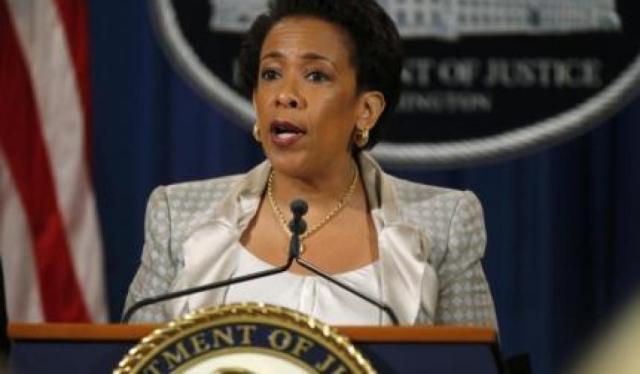
If violations are found, the investigation will result in a “court-enforceable agreement” to change the practices of the Baltimore Police Department.
Attorneys and investigators with the Justice Department’s civil rights division will meet with Baltimore law enforcement officials and community members in the coming days and weeks, Lynch said.
Lynch said the protests in Baltimore in recent weeks revealed that the trust between the community and Baltimore police officers “is even worse and has been severed” and said she hopes the investigation can lead to reforms to “create a stronger, a safer and a more unified city.”
She also emphasized that the turmoil in Baltimore — from Gray’s death in police custody to the ensuing protests and rioting — should not define the city.
“Earlier this week I visited with members of the community who took to the streets in the days following the unrest to pick up trash to clear the debris and they are Baltimore,” Lynch said, adding that youth leaders and tireless police officers focused on protecting the community “they too are Baltimore.”

Four NYPD parole officers have filed a civil lawsuit against the Ramapo Police Department after claiming they were racially profiled during a recent traffic stop, CNN reports. The officers were stopped on April 21 while attempting to carry out an arrest warrant and wearing their badges, bulletproof vests, and a placard on their truck’s dashboard.
The force claims they received a 911 call about “four big people” with “bulletproof vests on” riding in an unmarked car. According to CNN:
Mario Alexandre and his colleagues — Sheila Penister, Annette Thomas-Prince and Samuel Washington — are all black New York State Parole officers. The parole officers have filed a civil lawsuit, alleging that they were racially profiled by the white officers and that their detainment was unnecessarily malicious and reckless.
In addition to being punched by a lieutenant, Alexandre says he showed his badge but was ignored by the rest of the officers.
Penister said that when she attempted to show her New York State ID to a police sergeant, he “became enraged and approached her in a threatening manner with his hand held on the butt of his gun,” court documents state. When all parole officers were identified, they allege they were still forcibly detained and not permitted to leave.
Penister later told reporters she still suffers anxiety towards other officers. All of the parole officers have been diagnosed with post-traumatic stress disorder.
Ramapo Town Assistant Attorney Dennis Lynch says the police officers acted accordingly.
Lynch said called the actions of the police officers “reasonable under the circumstances” and that the “parole officers had not notified the town that they would be in town.”
The officers have not been placed on suspension, despite demands from the victims.
article by Desire Thompson via newsone.com

First came disclosures of racist and homophobic text messages exchanged by officers of San Francisco’s Police Department. That was followed by the discovery that sheriff’s deputies had been gambling on forced fighting matches between inmates at a city jail.
Then on Thursday, the San Francisco district attorney George Gascón announced that he was expanding the investigation of the city’s police and sheriff’s departments to examine whether those agencies have a deep-seated culture of systemic bias that has led to unlawful arrests or prosecutions.
In a year in which many of the nation’s major cities have been rocked by protests after the fatal police shootings of unarmed African-Americans, the broadened inquiry made clear that even a city known for its liberal politics can be buffeted by accusations that its officers behaved in a racially biased manner.
African-Americans in San Francisco have complained for years about harassment and the use of excessive force by the police. And while African-Americans make up about 5 percent of the city’s population, they account for half of its arrests and jail inmates, and more than 60 percent of the children in juvenile detention, according to city statistics.
In Baltimore on Wednesday, Mayor Stephanie Rawlings-Blake acknowledged a “fractured relationship between the police and the community” in her predominately African-American city and asked the Justice Department to conduct a civil rights investigation of the Police Department to determine whether officers had engaged in unconstitutional patterns of abuse or discrimination.
At a news conference in San Francisco announcing the expanded inquiry, the district attorney, George Gascón, acknowledged that the racist text messages had particularly undermined public confidence in both his office and the local criminal justice system.
“In the last few months, we have seen city after city where police use of force or other police activity is coming to the light and indicating that racial animosity and other types of biases play a significant role,” he said. “I think at one point we felt we would be immune from that type of activity.”
He also said he believed that the city’s tradition of inclusivity would allow it to avoid the tumult in Ferguson, Mo., and other cities where racial bias has been found to have played a role in the actions of police officers.

A day after U.S. Attorney Loretta Lynch visited Baltimore in the wake of unrest after Freddie Gray died of fatal injuries received in police custody, Mayor Stephanie Rawlings-Blake called for the U.S. Department of Justice to investigate the city’s embattled police department, according to a live report on CNN.
Lynch visited the city on Tuesday and attended a series of meetings with the mayor, embattled Police Commissioner Anthony Batts, and members of Gray’s family, reports The Baltimore Sun. Gray’s death reinflamed nationwide tensions over police brutality in Black communities, sparking sometimes violent protests last week.
Justice Department spokesperson Dena Iverson released a statement Wednesday regarding the possible DOJ investigation:
“The Attorney General has received Mayor Rawlings-Blake’s request for a Civil Rights Division ‘pattern or practice’ investigation into the Baltimore Police Department. The Attorney General is actively considering that option in light of what she heard from law enforcement, city officials, and community, faith and youth leaders in Baltimore yesterday.”
Rawlings-Blake’s announcement follows a bold move last week by Baltimore City State’s Attorney Marilyn Mosby to bring charges against six police officers in Gray’s death, which has been ruled a homicide.
article by Lynette Holloway via newsone.com

Sam’s Club and the Sam’s Club Giving Program recently announced the Small Business Economic Mobility Initiative, a five-year, multimillion-dollar philanthropic investment in small business growth through increased access to affordable capital and better borrower education. The first round of grants totaling $13.6 million went to eight national nonprofit organizations that provide access to capital and education to underserved U.S. small businesses including women, minorities and veterans. The announcement was made in celebration of National Small Business Week (May 4-8).
”Our founder Sam Walton started Sam’s Club to help small businesses get access to big business savings, save money and grow their businesses as a result,” Rosalind Brewer, president and CEO of Sam’s Club, said in a released statement. “Through this philanthropic investment, our founders’ legacy is carried forward by fortifying our communities’ lending resources to increase access to capital and borrower education for small business owners. In collaboration with dedicated nonprofits, we are proud to open doors for small business and strengthen the backbone of the U.S. economy.”
Through 2019, Sam’s Club’s Small Business Economic Mobility initiative aims to enable nonprofit Community Development Financial Institutions to make 5,000 loans to underserved small businesses with focus on women, minority and veteran-owned businesses with fewer than 20 employees; unlock $100 million in new capital from non-bank, community lending resources to low- and moderate-income small business owners; support 28,000 jobs in the small business community; and, reach one million underserved small business owners with education on responsible lending and better borrower practices.
Sam’s Club launched the philanthropic initiative to respond to the national struggle for small business owners in low-to-moderate income communities to attain affordable loans and navigate the lending process. By bringing together expertise, business initiatives such as the recently announced Business Lending Center and philanthropic investments, Sam’s Club and Sam’s Club Giving Program are uniquely positioned to help small business owners access affordable capital.
Across the country, small businesses and entrepreneurs report that access to capital is a major barrier to growth. According to The State of Small Business Lending report published by Harvard Business School fellow and former SBA Administrator Karen Mills, the share of small business loans provided by banks 20 years ago was about 50%, compared to only 30% in 2012. Specifically, minority owned businesses typically encounter higher borrowing costs, receive smaller loans and see their loan applications rejected more often by banks, according to a Minority Entrepreneurship Report published by UC-Berkeley and Wayne State University.
article by Carolyn M. Brown via blackenterprise.com

A protest song was not enough.
Days after announcing his song “Baltimore,” a tribute to Freddie Gray, the 25-year-old who suffered a fatal spinal-cord injury while in police custody, Prince has announced a surprise “Rally 4 Peace” concert in Baltimore. It will be held Sunday at Royal Farms Arena.
“In a spirit of healing, the event is meant to be a catalyst for pause and reflection following the outpouring of violence that has gripped Baltimore and areas throughout the U.S.,” Live Nation, the concert promoter, said in a statement. “As a symbolic message of our shared humanity and love for one another, attendees are invited to wear something gray in tribute to all those recently lost in the violence.”
Tickets go on sale today at 5 p.m. EST at LiveNation.com. Part of the proceeds will benefit Baltimore youth charities, organizers said.
While “Baltimore” has yet to be released — Prince said he was considering streaming the track on Jay Z’s Tidal service — its lyrics were made available online. The song begins:
Nobody got in nobody’s way
So I guess you could say
It was a good day
At least a little better than the day in Baltimore
Does anybody hear us pray?
For Michael Brown or Freddie Gray
Peace is more than the absence of war
Absence of war
article by Joe Coscarelli via nytimes.com