Press "Enter" to skip to content

Posts published in “U.S.”

Pulitzer Prize Winners: Colson Whitehead, Lynn Nottage, Hilton Als and Tyehiimba Jess Earn Awards for 2017

2017 Pulitzer Prize winners Hilton Als, Colson Whitehead, Lynn Nottage and Tyehimba Jess (photo via mic.com)

article by Sarah A. Harvard via mic.com
The Pulitzer Prize committee announced its 2017 winners at its 101st annual ceremony on Monday. Among the 21 winners of the prestigious literary award, four black writers were commended for their work. BuzzFeed News’ executive editor Saeed Jones tweeted that Tyehimba Jess, Hilton Als, Lynn Nottage and Colson Whitehead were among the new class of winners.
Jess won the Pulitzer Prize in poetry for Olio, a collection of his sonnets, songs and narratives that highlight the lives of “unrecorded African-American performers” before the Civil War up to World War I.
Nottage won the Pulitzer Prize in drama for her Broadway show Sweat. The play, a political drama, centers on a group of friends who spent most of their lives working with each other in a factory and follows their friendship’s tumultuous friendship as rumors of layoffs begin to stir. According to Playbill, Nottage is the first female playwright to win the Pulitzer Prize twice. Nottage tweeted out thank yous for her award.
Whitehead won the Pulitzer Prize in fiction for his 2016 novel The Underground Railroad. The novel tells the story of a teenage heroine, Cora, in 1850s Georgia who tries to escape a cotton plantation and start her journey toward freedom.
Als, a theater critic for the New Yorker, won a Pulitzer Prize in criticism.
Source: 2017 Pulitzer Prize Winners: 4 black writers take home the coveted award

New Yorker Writer Hilton Als Wins the Pulitzer Prize for Criticism

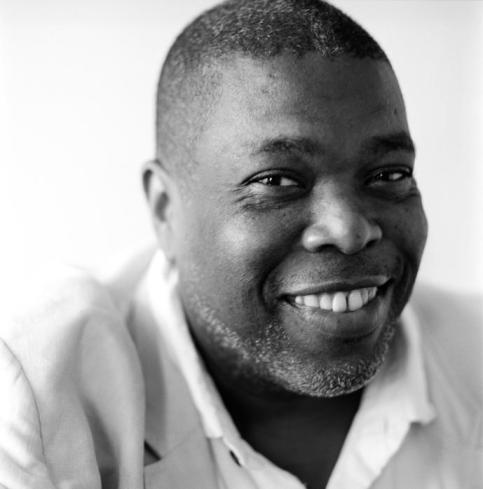
Hilton Als, a staff writer for The New Yorker since 1994, has been awarded the 2017 Pulitzer Prize for Criticism. (PHOTOGRAPH BY BRIGITTE LACOMBE)

article via newyorker.com
Hilton Als, the theatre critic for The New Yorker, has won the 2017 Pulitzer Prize for Criticism. Als became a staff writer for The New Yorker in 1994 and a theatre critic in 2002. Week after week, he brings to the magazine a rigorous, sharp, and lyrical perspective on acting, playwriting, and directing.
With his deep knowledge of the history of performance—not only in theatre but in dance, music, and visual art—he not only shows us how to view a production but how to place its director, its author, and its performers in the ongoing continuum of dramatic art. His reviews are not simply reviews; they are provocative contributions to the discourse on theatre, race, class, sexuality, and identity in America.
To see the ten pieces by Als, from 2016, that were part of the prize-winning submission to the Pulitzer committee, go to: Hilton Als Wins the Pulitzer Prize for Criticism – The New Yorker

15 Year-Old Chet Ellis wins Contest on White Privilege in Connecticut Town

Chet Ellis with parents Trey Ellis and Amanda Freeman (photo via nydailynews.com)

article by Christopher Brennan via nydailynews.com
The 15-year-old winner of an essay contest about white privilege says older residents of the well-to-do Connecticut town who caused a national debate about the competition could learn a thing or two from the youth.
Chet Ellis, a sophomore at Staples High School, won the competition’s $1,000 first prize for writing about the “unavoidable” racial incidents growing up in Westport, which is 93% white. “I can come at the issue from a young black teen perspective rather than all the old white men of Westport,” he told the Daily News Tuesday, a day after receiving his award.
Read Ellis’ essay here.
The contest put on by the town’s diversity council TEAM Westport gained widespread attention after some residents reacted strongly against it, saying it was an indictment of an affluent community that considers itself welcoming.“There are no barricades here. Nobody says if you’re black or whatever, you can’t move here,” Bari Reiner, 72, said in January.
Other parents said the board overstepped its bounds by bringing up white privilege, the unseen advantages given automatically to white people in a society where positions of power are dominated by people who look like them.
Chet, who moved to Westport from Morningside Heights, Manhattan, six years ago, said in his essay that he had not thought about white privilege until he moved to the wealthy suburb.
He recounted incidents where a white student said the N-word when talking about diversity in an almost all-white classroom, and another classmate saying he would have an easier time getting into college because he is black.
“I was stunned,” Chet wrote, “and mumbled something instead of firing back, ‘Your parents are third-generation Princeton and your father runs a hedge fund and yet you think my ride is free?”’
The teen, who wants to go into law or social work to help others, told the News that the episodes in his essay were just two examples of all the racially tinged interactions he has had in Westport, such as when a middle school teacher called him Jamal despite no student at the school having that name.
He urged more inclusive discussions and sensitivity about privilege, words echoed by his mother Amanda Freeman, a white college sociology professor at University of Hartford.
To read more, click here: Black 15-year-old wins contest on white privilege in Conn. town – NY Daily News

'Hidden Figures' Author Margot Lee Shetterly Signs Two-Book Deal with Viking

Margot Lee Shetterly (photo by Nicholas Hunt/Getty Images)

article by Sameer Rao via colorlines.com
Following the literary and film success of “Hidden Figures,” author Margot Lee Shetterly will turn her attention to two little-known but prominent Black families in Baltimore. Viking Books announced today (April 10) that it has acquired the rights to Shetterly’s next two books.
The first will focus on the mid 20th-century achievements of the Murphys, a publishing family, and the entrepreneurial Adams family. As described by PBS, formerly enslaved patriarch John Henry Murphy founded the The Afro-American newspaper and turned it, with his children, into one of the country’s most widely-read Black titles.
The paper tackled Jim Crow, the lack of Black representation in Baltimore government and other racial justice issues throughout its existence. The Murphys used this influence to successfully advocate local change, including desegregating the University of Maryland‘s law school.
A 2011 Baltimore Sun obituary for Adams family leader William “Little Willie” Adams notes that he and his schoolteacher-turned-politician wife Victorine spun wealth generated in the Great Depression-era underground economy into systematic venture capital and philanthropy. Their investments and donations sustained Black business development, employment and political clout for decades in Baltimore.
According to a Viking press statement about the not-yet titled book, “Shetterly will bring the history of Baltimore to life through the success stories of the Adamses and the Murphys, also showing the contrasting challenges faced by those left behind by redlining, lack of economic opportunity, and urban decay.”
The second book lacks a fixed topic but will also uncover the history of hidden Black figures.
Source: Hidden Figures’ Author to Introduce Readers to Unsung Black Families In Baltimore | Colorlines

FEATURE: Rev. Nathaniel Dixon Preaches the Gospel, Jazz Riffs and All


article by Corey Kilgannon via nytimes.com
While a soulful organist welcomed church congregants last Sunday, the Rev. Nathaniel Dixon stood in his office in a natty pinstriped suit, looking more like a hip jazz musician about to hit the bandstand than a pastor preparing to take the pulpit.His office, in St. Stephen’s United Methodist Church in the Marble Hill section of Manhattan, bore signs of both Jesus and jazz. Its walls had framed photographs of Duke Ellington and Billie Holiday, and religious literature shared space with saxophones, keyboards and guitars.
After pulling on his white pastor’s robe, Mr. Dixon grabbed a box of saxophone reeds and his microphone.“ Edmar, let’s bring that tenor down, man,” he said to his assistant, Edmar Flores, who carried Mr. Dixon’s tenor saxophone to the sanctuary. As the service heated up, with his band backing him, Mr. Dixon picked up his horn and played from the pulpit.“My Lord, my God — you are my savior,” he sang, his voice swelling up to the church’s majestic rafters. Then he took up his saxophone.
The pastor’s playing style was spare and insistent, reminiscent of one of John Coltrane’s spiritual songs. “People who aren’t used to seeing a preacher playing the saxophone are surprised,” he said. “And when they see I can actually play, they’re more surprised.” As a young jazz musician, Mr. Dixon was seasoned in Harlem clubs, and played with the likes of the guitarist George Benson, the saxophonist Sam Rivers, the pianist Kenny Kirkland and the drummer Chico Hamilton.
Back then, he played bebop. Today, it is mostly GoJa, his name for a blend of gospel and jazz that swings with a spiritually uplifting message.Mr. Dixon said he tried to match one of his songs to his sermon every Sunday. Last Sunday, it was his composition “My Lord, My God,” a lyrical ode that recalls the spiritual style of the saxophonist Pharoah Sanders. The tune helped illustrate a point he was making about the Apostle Thomas’s reaction when called upon by Jesus.“I like Jesus because he calls you out,” Mr. Dixon said, before describing Thomas’s recognition of Jesus as his “eternal God.”“Somebody ought to clap right there,” he told the spare congregation, which included older women in ornate hats and ushers in white outfits.Applause went up and seemed to mingle with the morning sunlight filtering through the stained glass windows.
During the song, Mr. Dixon pointed to members of the band, directing each to perform a solo, then adding through the microphone, “Give the drummer some.”He told the congregation he wrote “My Lord, My God” while sitting in the church alone, “just me and the Lord.”“I like to doodle on the piano,” he said. “That’s where you get a chance to hear God speaking to you.”Mr. Dixon said he grew up in public housing in the Bronx and attended the High School of Music and Art in Manhattan. Struggling to land and keep gigs at jazz clubs in Harlem, like Smalls Paradise and Showman’s, taught him how to fend off other musicians looking to replace him.
“Just because Jesus said to turn the other cheek doesn’t mean you have to let people walk all over you,” he said.The saxophonist Stanley Turrentine taught him to play with no excuses, and the alto player Lou Donaldson helped him choose a better mouthpiece. Connecting with a jazz club audience helped prepare him to connect with a congregation, said Mr. Dixon, who worked nearly 30 years as a teacher and administrator in New York City public schools. At one middle school in the Bronx, he was allowed to keep a cot so he could head there after late-night gigs, he said.
Before retiring from teaching in 2005, he began studying for his ordination as a Methodist minister. He told the congregation on Sunday that he was “happy minding my own business, but God said, ‘I ain’t finished with you yet.’”His latest CD, “Made in New York City: Nat Dixon and Friends,” includes a version of “My Lord, My God,” with vocals by the Rev. Lori Hartman, daughter of the jazz singer Johnny Hartman and herself a pastor, at St. Paul United Methodist Church in Jamaica, Queens.
To read full article, go to: https://www.nytimes.com/2017/04/07/nyregion/preaching-the-gospel-jazz-riffs-and-all.html?em_pos=small&emc=edit_ur_20170409&nl=nytoday&nlid=58278902&ref=headline&_r=0

Gregory Robinson Named Fellow of the Royal Society of Chemistry

Professor of Chemistry Gregory H. Robinson (photo via jsu.edu)

article via jbhe.com
Gregory H. Robinson, the University of Georgia Foundation Distinguished Professor of Chemistry at the University of Georgia, has been named a fellow of the Royal Society of Chemistry. Founded more than 175 years ago, the Royal Society of Chemistry is the largest organization in Europe for advancing the chemical sciences.
The Royal Society of Chemistry partners with industry and academia, promotes collaboration and innovation, advises governments on policy and promotes the talent, information and ideas that lead to great advances in science.
Professor Robinson’s research focuses on the synthesis, structure, and stabilization of compounds containing multiple bonds between heavier main group elements. “To be named a Fellow of the Royal Society of Chemistry is a tremendous honor, and to now be associated with some of the world’s most notable chemists is equally humbling,” Professor Robinson said. “This international honor is a testament to the gifted students and creative colleagues that have been a part of our research team over the years.”
Professor Robinson is a graduate of Jacksonville State University in Alabama. He holds a Ph.D. from the University of Alabama.
Source: Gregory Robinson Named a Fellow of the Royal Society of Chemistry : The Journal of Blacks in Higher Education

11 Affordable Coffee Table Books That Celebrate Black Beauty

Being natural is a gift, and in this book, author Michael July explore the progression of natural hair into mainstream culture and media.

article by Alexis Webb via essence.com
These are the perfect conversation starters for your house guests. 
What happens when you combine your love for literature with an interest for beauty and hair? Well, tons of fun and interesting home décor that can inspire your daily routine!
Coffee table reads don’t always have to be mundane. They can often also offer some lighthearted relief, much needed pick-me-up or an education while chatting with friends and family over the latest “tea.”
Vintage Black Glamour

To see full article, go to: Beauty and Hair Coffee Table Books | Essence.com

Essence Unveils Night-By-Night Schedule for 2017 Concert Series at Superdome this Summer

 article by Lori Lakin Hutcherson (@lakinhutcherson)
The 2017 ESSENCE Festival has announced the all-star, night-by-night schedule for its concert series, from June 30 to July 2 at the Superdome in New Orleans, LA.
Single-night tickets are now on sale and are priced starting at $50 per person per night.
The concerts will feature more than 40 acts across five stages in the Superdome throughout the weekend on the festival’s renowned Mainstage and in the intimate Superlounges. Festival first-timers Diana Ross and Chance the Rapper will open and close the weekend concert series with headlining performances on Friday and Sunday night respectively – along with a special all-female Saturday night lineup, inspired by headliner Mary J. Blige’s forthcoming album Strength of A Woman.

Other well-known performers in this year’s line-up include John Legend, india.arie, Jill Scott, Chaka Khan and Solange.

Roy Wood Jr. from Comedy Central’s “The Daily Show” will serve as the Mainstage host for the weekend, with more surprise guest performances to be announced.
For more information about ticket sales and accommodations and for the latest news about the ESSENCE Festival®, visit www.essencefestival.com, join the festival community by following us on Twitter @essencefest #EssenceFest and become a fan of 2017 ESSENCE Festival® on Facebook.

Washington D.C. Mayor Muriel Bowser Pledges $600,000 For Missing D.C. Teens


article by Angela Bronner Helm via newsone.com
Less than two weeks ago, Washington, D.C. Mayor Muriel Bowser released a six-point plan to address what has become an incendiary national story of missing black and brown girls in the district.
The issue was getting so much attention, in fact, that the mayor, who said that the plan was drafted in January, distributed a broad outline early, including $600,000 in grant support for organizations that work with teens at risk and the launch of a website which will eventually update missing cases in real time.
Mayor Bowser says she wants to “break the cycle” of young people who go missing – the majority, according to the MPD, of whom are Black and brown girls, a large number of whom “voluntarily” leave home and are not abducted (which would trigger the ubiquitous Amber Alerts on our phones.)


To read full article, go to: D.C. Mayor Pledges $600,000 For Missing D.C. Teens | News One

HBCU South Carolina State University Creates Program for its Dropouts to Finish Degrees at Lower Tuition Rate

(photo via counton2.com)

article via jbhe.com
South Carolina State University, the historically Black educational institution in Orangeburg, South Carolina, has announced a new effort to get students who had begun studies at the university but had not completed their degree for some reason to come back and complete what they had started.
The Bulldog Academic Resumption Covenant (BARC) Program enables students to complete their degree program through study with the University of Phoenix. Some 2,500 students in 20 degree programs who dropped out between 2010 and 2015 have been invited to join the BARC program.
These students will receive a 50 percent reduction in tuition costs and take online courses through the University of Phoenix that have been approved by the South Carolina State University faculty. These credits can then be used to satisfy degree requirements at South Carolina State. No more than 24 percent of all credits toward the South Carolina State University degree can be taken through the University of Phoenix.
James E. Clark, president of South Carolina State University, said that “the bottom line is we miss our students, and we want them to return home.”
To read more: South Carolina State University Invites Dropouts to Come Home : The Journal of Blacks in Higher Education