Press "Enter" to skip to content

Posts published in “News”

Courageous Passenger Kenneth Smith Hailed As Hero After Tackling Gunman On Megabus

Hero megabus passenger Kenneth Smith (Photo via
Hero megabus passenger Kenneth Smith (Photo via WMAQ-TV)

A passenger on a Megabus that was heading north from Chicago has been hailed as a hero after he reportedly subdued an armed man who fired at least one shot minutes after the bus started its journey.
Kenneth Smith, 28, told the Chicago Tribune that he had just settled into his seat late Tuesday when a loud noise resounded through the bus. Smith was traveling to Minneapolis to visit his 6-year-old son.
“It was real loud,” Smith told WMAQ-TV. “We didn’t know what it was until we saw the gun.”
Police said the gunman discharged his weapon in the bathroom of the bus. He then approached the driver and allegedly began harassing her. A witness said it appeared the gunman also attempted to grab the steering wheel, per WMAQ-TV.
That’s when Smith intervened, confronting the man and telling him to return to his seat. The suspect reportedly did as he was told, but came back moments later, with a gun.
“He came back downstairs, he was grabbing at his hip, I had already seen that and I told him he was getting too close,” Smith told WMAQ-TV. “As he kept coming that’s when I rushed him, I choked him, he fell to the floor, the clip came out of the gun and that’s when I saw it so I pulled it out, gave it to my cousin and I held him down until the police arrived.”
According to WGN-TV, the bus stopped at the Des Plaines Oasis, where the gunman was taken into police custody. Police said charges are expected to be filed against the suspect.
Passengers on the Megabus praised Smith’s quick action.
“He saved us,” Ken Hasley told WMAQ-TV. “The bus could’ve crashed or anything the way that guy was aggravating the bus driver so that guy right there is a hero.”
article by Dominique Mosbergen via huffingtonpost.com

Chicago Wins Bid to Host Barack Obama Presidential Library

Martin Nesbitt, chairman of the Barack Obama Foundation, announced on Tuesday that the library would be built in Chicago’s South Side. (Credit: Joshua Lott for The New York Times)

CHICAGO — Maybe the Obamas will never return to live in Chicago after the presidency is over, their global celebrity pulling them toward New York or Los Angeles and away from the unpretentious Midwest. But Chicagoans will always have this: As it was formally announced on Tuesday, their city will be home to his presidential library.

“His journey began on the South Side and now we know that it will come full circle with his library coming home to the South Side of Chicago,” an elated Mayor Rahm Emanuel said on Tuesday at a ceremony here, where the Barack Obama Presidential Center, which is to include the library, museum and space for the president’s foundation, will be built.

But as Chicago officially notched a victory over New York and Hawaii, which were also contenders, it immediately turned to the next question: Where, exactly, on the South Side will the library be built?

The Obama Foundation says it is still undecided on the location and will make the announcement in roughly the next six to nine months. Two parks near the University of Chicago’s campus on the South Side are being considered for the library: Washington Park, a 380-acre space that borders several neighborhoods, including Washington Park and Hyde Park; and Jackson Park, which hugs both the neighborhood of Woodlawn and Lake Michigan, and is the site of the Museum of Science and Industry, a golf course, soccer fields and a children’s hospital. The transfer of about 20 acres where the library could be built was approved in February by the Chicago Park District.

City officials have trumpeted the project’s potential to give the South Side a much-needed influx of tourism, new jobs and economic development. (Credit: Joshua Lott for The New York Times)

The library will be built in a partnership with the University of Chicago, where President Obama once taught law, and could open by 2020 or 2021.  Amid the triumphant announcement and buoyant speeches by civic leaders, there are still concerns being raised by some people about the permanent loss of valuable parkland in a highly populated part of the city.

"Women on 20s" Organization Pushing U.S. Treasury to Replace Andrew Jackson with Harriet Tubman on the $20

A group that wants to kick Andrew Jackson off the $20 bill and replace him with a woman has, after months of collecting votes, chosen a successor: Harriet Tubman.
Tubman, an abolitionist who is remembered most for her role as a conductor in the “Underground Railroad,” was one of four finalists for the nod from a group of campaigners calling themselves “Women on 20s.” The campaign started earlier this year and has since inspired bills in the House and the Senate.
The other three finalists were former first lady and human rights activist Eleanor Roosevelt; civil rights figure Rosa Parks; and Wilma Mankiller, the first female chief of the Cherokee Nation. Now that voters participating in the campaign have chosen Tubman, Women on 20s will bring a petition with the people’s choice to the White House.
“Our paper bills are like pocket monuments to great figures in our history,” Women on 20s Executive Director Susan Ades Stone said in an e-mailed statement. “Our work won’t be done until we’re holding a Harriet $20 bill in our hands in time for the centennial of women’s suffrage in 2020.”
In all, the group said, it has collected more than 600,000 votes for its campaign.  In Tuesday’s White House press briefing, Press Secretary Josh Earnest said that Tubman was a “wonderful choice” for the bill, but stopped short of saying whether the President backs putting Tubman on the $20.
If the government agrees that it’s time to replace Andrew Jackson on the bill, its choice might not end up being Tubman. But the idea of putting a woman on America’s paper currency has attracted some notable support.
“Last week, a young girl wrote to me to ask why aren’t there any women on our currency,” President Obama said in a July speech in Kansas City, before the launch of the Women on 20s voting campaign. “And then she gave me a long list of possible women to put on our dollar bills and quarters and stuff — which I thought was a pretty good idea.”

Tamir Rice’s Mom Out of Homeless Shelter, Thanks to Family and Crowdfunding

Samaria Rice, mother of Tamir Rice- who was shot to death by a police officer - speak on a panel titled "The Impact of Police Brutality - The Victims Speak" at the National Action Network (NAN) national convention on April 8, 2015 in New York City.
Five months after her son Tamir was killed by the police in Cleveland, Samaria Rice moved herself into a homeless shelter, unable to stay near the spot where her son was playing with a toy gun one minute, and lay dead the next.
But thanks to an assist from her family, Rice was recently able to relocate to a new house in the city, ABC5 reported.  “Emotionally, she just could not take it, and she had nowhere else to go,” Rice’s attorney Walter Madison told Cleveland Scene of Rice’s decision. “It was more comfortable for her in a shelter than it would have been in her own home.”
Due to delays in the criminal investigation, Rice continues to accrue additional legal expenses, which a GoFundMe campaign hopes to offset.
The police officers involved in the case have requested that the family put off its federal civil rights lawsuit . The officers are concerned their testimonies in the federal investigation may self-incriminate them in the criminal case, the New Republic reported.
Tamir’s relatives, however, have protested that request saying that delaying the lawsuit will cause their legal costs to surge and exacerbate their emotional pain, according to the Associated Press.
Tamir still has not been buried because the family is concerned that additional medical examinations could be required, according to the court motion.

article via eurweb.com

Black Unemployment Rate Hits Seven-Year Low

JobSeekingInterviewUnemployment620480The unemployment rate for black Americans fell below 10 percent in April, for the first time since the economic downfall in 2008.
During the recession, black unemployment had peaked at 16.8 percent in March 2010, while unemployment for whites was almost half that rate. This past April, the unemployment rate for African Americans dipped into the single digits category at 9.6 percent. While the latest data shows signs of improvement, it’s clear that an employment gap still exist between races. Despite the national unemployment rate falling to 5.4 percent, blacks in states like Illinois, Michigan, California and Pennsylvania face unemployment rates above 12 percent.
[Related: U.S. Applications for Unemployment Aid Hit 15-Year Low]
While some reports view education as the reason for the employment gap, data shows that 12.4 percent of black college graduates between the ages of 22 and 27 faced unemployment in 2013 whereas the national unemployment rate for college graduates in the same age range was 5.6 percent. The median weekly paycheck for a white college graduate last year was $1,132, versus $895 for a black college graduate.
With factors such as discrimination and workplace bias coming into play when considering the road to employment for blacks, the latest unemployment numbers are not only signs of progression but also proof that more work needs to be done.
article by Courtney Connley via blackenterprise.com

Google Commits $150 million in 2015 to Diversify Tech

Google diversity doodle (via Google.com)

The Mountain View, Calif., tech giant Google is trying to get more women and minorities into technology with an ambitious $150 million plan. Google told CNNMoney half that money will go to outside organizations and communities, while the other half will be used internally to make Google more inclusive.

In a blog post this week, VP of People Operations Nancy Lee laid out the company’s strategy for 2015. It follows earlier public efforts by Google (GOOG) to increase diversity, including sending Google engineers to historically black universities and and working with Disney (DIS) to improve depictions of girls in computer science. In 2014, the company put $114 million toward diversity programs.
The company is also expanding where it looks for fresh talent by recruiting at a wider variety of colleges. The lack of diversity in tech goes deeper than just the HR department. As was highlighted in the Ellen Pao gender discrimination trial, company culture is also key to keeping and encouraging a diverse workforce. Google is offering more internal training and workshops on unconscious bias, and employees can use part of their time to work on diversity initiatives.
It’s also looking at the root of the problem, expanding computer science education for kids and pushing to get under-served communities online.
The company still has a lot of work to do. According to the diversity report it released last year, only 17% of its tech workers are female, 1% of its tech workforce is black and 2% are Hispanic. In the blog post, Lee said Google plans to release 2015 diversity numbers soon.
In March, Google executive Eric Schmidt was called out during a panel on diversity at SXSW for repeatedly interrupting Megan Smith, the chief technology officer of the U.S. and a former Googler. The audience member who pointed it out was Judith Williams, the manager of Google’s global diversity and talent programs.
It’s not the only company putting money into diversity. Apple has donated $50 million to organizations that will help more minorities and women get into tech. Intel is sinking $300 million into a program that expands STEM education to more diverse students.
article by

Emory University School of Law to Name an Endowed Chair in Honor of John Lewis

Civil Rights leader and Congressman John Lewis (Photo via black
Civil Rights leader and Congressman John Lewis (Photo via history.com)

The Emory University School of Law has announced that it is establishing an endowed chair to honor civil rights legend and Georgia Congressman John Lewis. The John Lewis Chair in Civil Rights and Social Justice will be funded by an anonymous $1.5 million donation. The law school will raise an additional $500,000 to fully fund the professorship.
Robert Shapiro, dean of the law school, said that “this gift will allow us to perform a nationwide search and name a professor who will further scholarship on the issues of civil rights and social justice. Through this chair, we are honored to recognize Congressman’s Lewis’ historical achievements in these vital areas.
John Lewis was a keynote speaker at the 1963 March on Washington. As chair of the Student Nonviolent Coordinating Committee, Lewis was beaten on the Edmund Pettus Bridge in Selma, Alabama, on Bloody Sunday in March 1965. He has served his Atlanta district in Congress since 1987.
The anonymous donor stated that “John Lewis exemplifies the values of courage, commitment, dignity, humanity, fairness and equal opportunity that were and are the hallmarks of the movement. Congressman Lewis is an inspiration to us as he continues to speak out against injustice and to fight for equality and civil rights. Atlanta holds an important place in the history of civil rights in the U.S. and John Lewis is a central figure in that history; we hope that a professorship at Emory Law School in his name will in some small way help to continue the good and great work that he has done these last 50 years.”
article via jbhe.com

U.S. Justice Department Officially Launches Baltimore Police Investigation

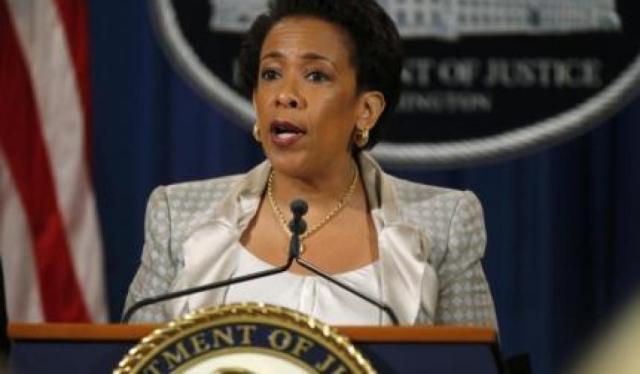
U.S. Attorney General Officially announces investigation of Baltimore Police Department (Photo via newsweek.com)

Washington (CNN) The Justice Department launched on Friday a pattern or practice investigation into the methods of the Baltimore Police Department, weeks after the death of 25-year-old Freddie Gray.

Calling police-community relations “one of the most challenging issues of our time,” Attorney General Loretta Lynch announced Friday the investigation, which will look into whether the police department has used excessive force and conducted unlawful searches, seizures and arrests, and discriminatory policing practices through the lens of civil rights and constitutional violations.

She said she launched the investigation at the urging of Baltimore officials and community leaders, and with the support of the Baltimore police union.  “Our goal is to work with the community, public officials, and law enforcement alike to create a stronger, better Baltimore,” Lynch said at a press conference Friday.

If violations are found, the investigation will result in a “court-enforceable agreement” to change the practices of the Baltimore Police Department.

Attorneys and investigators with the Justice Department’s civil rights division will meet with Baltimore law enforcement officials and community members in the coming days and weeks, Lynch said.

Lynch said the protests in Baltimore in recent weeks revealed that the trust between the community and Baltimore police officers “is even worse and has been severed” and said she hopes the investigation can lead to reforms to “create a stronger, a safer and a more unified city.”

She also emphasized that the turmoil in Baltimore — from Gray’s death in police custody to the ensuing protests and rioting — should not define the city.

“Earlier this week I visited with members of the community who took to the streets in the days following the unrest to pick up trash to clear the debris and they are Baltimore,” Lynch said, adding that youth leaders and tireless police officers focused on protecting the community “they too are Baltimore.”

Black Parole Officers Sue Police Department After Being Racially Profiled By White Cops

Police
(Photo Source: JEWEL SAMAD / Getty)

Four NYPD parole officers have filed a civil lawsuit against the Ramapo Police Department after claiming they were racially profiled during a recent traffic stop, CNN reports.  The officers were stopped on April 21 while attempting to carry out an arrest warrant and wearing their badges, bulletproof vests, and a placard on their truck’s dashboard.
The force claims they received a 911 call about “four big people” with “bulletproof vests on” riding in an unmarked car. According to CNN:

Mario Alexandre and his colleagues — Sheila Penister, Annette Thomas-Prince and Samuel Washington — are all black New York State Parole officers. The parole officers have filed a civil lawsuit, alleging that they were racially profiled by the white officers and that their detainment was unnecessarily malicious and reckless.

In addition to being punched by a lieutenant, Alexandre says he showed his badge but was ignored by the rest of the officers.

Penister said that when she attempted to show her New York State ID to a police sergeant, he “became enraged and approached her in a threatening manner with his hand held on the butt of his gun,” court documents state. When all parole officers were identified, they allege they were still forcibly detained and not permitted to leave.

Penister later told reporters she still suffers anxiety towards other officers. All of the parole officers have been diagnosed with post-traumatic stress disorder.

Ramapo Town Assistant Attorney Dennis Lynch says the police officers acted accordingly.

Lynch said called the actions of the police officers “reasonable under the circumstances” and that the “parole officers had not notified the town that they would be in town.”

The officers have not been placed on suspension, despite demands from the victims.

article by Desire Thompson via newsone.com

San Francisco D.A. George Gascón Expands Racial Bias Inquiry Into SF Police Department

San Francisco District Attorney George Gascón (Photo via
San Francisco District Attorney George Gascón (Photo via sfexaminer.com)

First came disclosures of racist and homophobic text messages exchanged by officers of San Francisco’s Police Department. That was followed by the discovery that sheriff’s deputies had been gambling on forced fighting matches between inmates at a city jail.

Then on Thursday, the San Francisco district attorney George Gascón announced that he was expanding the investigation of the city’s police and sheriff’s departments to examine whether those agencies have a deep-seated culture of systemic bias that has led to unlawful arrests or prosecutions.

In a year in which many of the nation’s major cities have been rocked by protests after the fatal police shootings of unarmed African-Americans, the broadened inquiry made clear that even a city known for its liberal politics can be buffeted by accusations that its officers behaved in a racially biased manner.

African-Americans in San Francisco have complained for years about harassment and the use of excessive force by the police. And while African-Americans make up about 5 percent of the city’s population, they account for half of its arrests and jail inmates, and more than 60 percent of the children in juvenile detention, according to city statistics.

D.A. Gascón, formerly the SFPD Chief of Police, said, “If just one individual was wrongly imprisoned because of bias on the part of these officers, that’s one too many.”

In Baltimore on Wednesday, Mayor Stephanie Rawlings-Blake acknowledged a “fractured relationship between the police and the community” in her predominately African-American city and asked the Justice Department to conduct a civil rights investigation of the Police Department to determine whether officers had engaged in unconstitutional patterns of abuse or discrimination.

At a news conference in San Francisco announcing the expanded inquiry, the district attorney, George Gascón, acknowledged that the racist text messages had particularly undermined public confidence in both his office and the local criminal justice system.

“In the last few months, we have seen city after city where police use of force or other police activity is coming to the light and indicating that racial animosity and other types of biases play a significant role,” he said. “I think at one point we felt we would be immune from that type of activity.”

He also said he believed that the city’s tradition of inclusivity would allow it to avoid the tumult in Ferguson, Mo., and other cities where racial bias has been found to have played a role in the actions of police officers.