

TALLAHASSEE — Florida House Speaker Will Weatherford announced Friday that he will order hearings this fall on the state’s “stand your ground” law, a victory for the young protesters known as the Dream Defenders who have spent the past two weeks protesting at the Capitol. “It’s a critical first step,” said Phillip Agnew, executive director of the Dream Defenders. “We’ve been here for three weeks. We know Democracy takes time. Progress takes time.”
They shouldn’t celebrate too hard. Weatherford assigned the task of chairing the hearings to a staunch supporter of the law, Rep. Matt Gaetz, R-Fort Walton Beach. “I don’t support changing one damn comma of the stand your ground law,” Gaetz said Friday. “It would be reactionary and dangerous to make Floridians less safe to pacify uninformed protesters.” Gaetz, the 31-year-old son of Senate President Don Gaetz, talks tough on crime. He passed a bill this year that expedited death row cases and has been known for pushing conservative causes popular in his Panhandle district. He expects the hearings to draw national attention, and he says he’s ready for the debate.
“I want to have hearings, it’s a good idea,” Gaetz said. “Right now, the only voices on stand your ground are coming from the radical left. I want an opportunity to give a full-throated defense of the law.” He said he’s not sure when he’ll hold the hearings, how long they’ll last, or how they’ll be structured. But he said his bias shouldn’t deter those holding out hope that hearings can lead to changes in the law. “Bills I don’t support occasionally pass my committee,” he said.
Weatherford agreed to the hearings in an op-ed published Friday. “Our evaluation of its effectiveness should be guided by objective information, not by political expediency,” he wrote. “Does the law keep the innocent safer? Is it being applied fairly? Are there ways we can make this law clearer and more understandable.”
Posts published in “News”

The Smithsonian’s National Museum of African-American History wants the hooded sweatshirt Trayvon Martin was wearing when he was shot and killed. The 17-year-old was shot and killed on his way home by neighborhood watchman George Zimmerman. Zimmerman was charged with second-degree murder and pleaded not guilty, arguing self defense.
On July 13th, Zimmerman was acquitted of all charges by a Florida jury. The hoodie Martin was wearing on the night of his death became a symbol for protesters and Martin family supporters. Lonnie Bunch, the museum’s director, confirmed to The Washington Times that they are seeking the hoodie for display following the Department of Justice’s investigation.
“It became the symbolic way to talk the Trayvon Martin case. It’s rare that you get one artifact that really becomes the symbol,” Bunch told The Washington Times. “Because it’s such a symbol, it would allow you to talk about race in the age of Obama.”
The National Museum of African American History and Culture is set to open in 2015.
Related Stories:
- Oprah Winfrey Donates $12 Million to New African-American Museum
- Juror B29 Says Zimmerman Got Away With Murder, Owes Martin’s Parents Apology
- Trayvon Martin’s Dad Tracy Martin Adds Voice to Help Black Men and Boys
- Demonstrations Across the Country Commemorate Trayvon Martin
- EDITORIAL: What We Can Do To Honor and Bring Justice to Trayvon Martin’s Life
article by Carrie Healey via thegrio.com

Just in time for the upcoming academic year, the House of Representatives on Wednesday passed a bill to lower student loan interest rates by a vote of 392-31. The measure, now headed to President Obama for his signature, retroactively lowers the interest rate on loans that doubled from 3.4 percent to 6.8 percent on July 1.
Moving forward, Congress will no longer fix interest rates each year. Instead, they will be tied to the interest rate on money borrowed by the federal government. The bill does include caps so the interest rate won’t exceed 8.25 percent for undergraduates, 9.5 percent for graduate students and 10.5 percent for parents who secure loans for their children.
“This bipartisan compromise offers hardworking students and families critical protections, reduces rates on all new loans this year, and saves undergraduates $1,500 on average over the life of their loans. The plan caps market-based interest rates, ensuring students won’t bear the brunt of skyrocketing rates in the future,” said Rep. Sheila Jackson Lee (D-Texas). The nonpartisan Congressional Budget Office estimates the bill will reduce the federal deficit by $715 million over the next 10 years.
article by Joyce Jones via bet.com
Moving forward, Congress will no longer fix interest rates each year. Instead, they will be tied to the interest rate on money borrowed by the federal government. The bill does include caps so the interest rate won’t exceed 8.25 percent for undergraduates, 9.5 percent for graduate students and 10.5 percent for parents who secure loans for their children.
“This bipartisan compromise offers hardworking students and families critical protections, reduces rates on all new loans this year, and saves undergraduates $1,500 on average over the life of their loans. The plan caps market-based interest rates, ensuring students won’t bear the brunt of skyrocketing rates in the future,” said Rep. Sheila Jackson Lee (D-Texas). The nonpartisan Congressional Budget Office estimates the bill will reduce the federal deficit by $715 million over the next 10 years.
article by Joyce Jones via bet.com

SAN FRANCISCO — A federal appeals court says Oscar Grant’s father can sue the Northern California transit officer who shot and killed his son on a train platform. The 9th U.S. Circuit Court of Appeals on Tuesday rejected former officer Johannes Mehserle’s claim that he was acting in his official capacity when he killed the younger Grant during a 2009 New Year’s Day melee captured on video by several bystanders.
Violent demonstrations ensued after the videos showing the white officer shooting the unarmed black man were viewed by millions online. The appeals court said it’s up to a jury to determine whether Mehserle was justified in shooting Grant in the back as he lay face down on the train platform. Mehserle served 11 months in prison after he was convicted of involuntary manslaughter. The appeals court’s decision affirmed a lower court ruling.
Related Stories:
Violent demonstrations ensued after the videos showing the white officer shooting the unarmed black man were viewed by millions online. The appeals court said it’s up to a jury to determine whether Mehserle was justified in shooting Grant in the back as he lay face down on the train platform. Mehserle served 11 months in prison after he was convicted of involuntary manslaughter. The appeals court’s decision affirmed a lower court ruling.
Related Stories:
- REVIEW: Why “Fruitvale Station” Is The Must-See Movie of the Year
- Director Ryan Coogler Brings Heart, Talent to ‘Fruitvale’
- ‘Fruitvale Station’ Bows Strong Amid Trayvon Martin Reaction
article by via huffingtonpost.com

According to The Telegraph, American student Gabrielle Turnquest was called to the Bar of England and Wales after passing her exams at just 18, qualifying her as a barrister in those countries. Turnquest is a native of Windermere, Florida who made news when she graduated from Liberty University of Virginia at 16, which made her that college’s youngest-ever graduate with a degree in psychology. She most recently took courses at Britain’s University of Law along with her sister Kandi, who also passed her bar exams (she is 22). The average lawyer in Britain undertakes the Bar Professional Training Course when they are 27.
The teenager hopes eventually to be a fashion law specialist and will also take the American Bar exam so she can practice law in the U.S. But as her parents are originally from the Bahamas and the British exams cover that country as well, she may practice there for a time. She said: “I am honored to be the youngest person to pass the Bar exams but, really, I was not aware at the time what the average age was. I didn’t fully realize the impact of it.”
article by Lori Lakin Hutcherson
article by Lori Lakin Hutcherson

According to Variety.com, Cheryl Boone Isaacs has become the Academy of Motion Picture Arts & Sciences first African-American president. After a lengthy career behind the scenes, the Academy Board of Governors chose Isaacs, who served as first vice president of the Academy board. Isaacs, who has held every other Academy board officer position and also produced last year’s Governor’s Awards, also becomes the first female Academy president since Fay Kanin in 1979-83 and third overall, counting the two-month tenure of Bette Davis in 1941.
Rob Friedman, the co-chairman of Lionsgate Motion Picture Group and most recently treasurer of the board, was perceived as the other top candidate for the post. Voting totals are not released by the Academy. Academy board members serve three-year terms, while officers serve one-year terms, with a maximum of four consecutive terms in any one office, including president.
The president role was once a ceremonial title. But in recent years the role has taken on greater responsibility, as each worked with the Academy’s salaried staff, including CEO Dawn Hudson and Ric Robertson to further diversity initiatives, while also trying to move the Academy Museum of Motion Pictures, scheduled to open in 2017, closer to reality. They also dealt with questions of electronic voting, changes in Oscar rules (such as more than five best-picture contenders) and a restructuring of the staff.
article by Jon Weisman with additional reporting by Lori Lakin Hutcherson

“Here in New York City, we’ve institutionalized Mr. [George] Zimmerman’s suspicion with a policy that all but requires our police officers to treat young Black and Latino men with suspicion, to stop them and frisk them because of the color of their skin.” Though Thompson has largely avoided speaking about race on the campaign trail, he said he felt urged to do so after Zimmerman’s “not guilty” verdict.
“Trayvon Martin did die because he was Black. Of that there is no doubt,” he added. Thompson also says we must begin looking at how the government enables systemic racism. “I do not believe our government can fully stop racism, but I do believe we must constantly look to see how it may enable it, even unintentionally,” he said.
“So we must ask ourselves, when fear of young Black men ends in deadly violence against the innocent, has our government perpetuated that fear by targeting people of color with suspicion?”
Thompson is the only African-American candidate in the mayoral race.
article by Hannington Dia via newsone.com

A TWO-YEAR-OLD child prodigy has become the youngest ever member of Mensa – after an IQ test ranked him smarter than President Barack Obama and British Prime Minister David Cameron. Little Adam Kirby has read Shakespeare and learned Japanese, Spanish and French. The super-intelligent tot notched up an IQ of 141 – 10 points higher than two of the most powerful world leaders. His parents Dean, 33, and Kerry-Ann, 31, immediately knew their son was different when he toilet trained HIMSELF – after reading a book on the subject aged just one.
Adam’s other impressive abilities include being able to spell 100 words, reciting most of his times tables up to 10, learning the periodic table and mastering a map-of-the-world puzzle designed to challenge adults. After receiving his IQ test results, he was invited to join the world’s oldest and most prestigious genius society Mensa.
Dad Dean, an IT consultant from Mitcham, London, said: “Adam’s abilities are outstanding and we’ve been actively developing his intelligence since he was 10 weeks old. We’re certainly delighted for him. “While most children are just learning to stand up or crawl, Adam was reading books. His development was just mind-blowingly quick.”
Adam’s score of 141 – just four shy of the ’Genius’ category – puts him head and shoulders above the average score of 100. The Stanford-Binet exam, originally developed by French psychologist Alfred Binet, has become renowned for being able to accurately determine a child’s intelligence levels and predict future grades.
Read more: http://www.thesun.co.uk/sol/homepage/news/4985250/Child-prodigy-2-joins-Mensa.html#ixzz2aNmxoX5Z
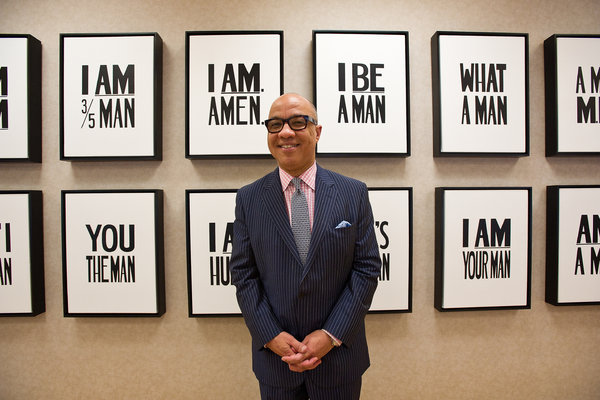
Darren Walker (pictured above) was born in a charity hospital in Lafayette, La., and grew up in the 1960s in a single-parent household in rural Texas, where his mother worked as a nurse’s aide and he was enrolled in one of the first Head Start programs. He went on to the University of Texas at Austin with help from a Pell grant scholarship, awarded to low-income students based on financial need. He put in a few years at a prestigious Manhattan law firm and a Wall Street investment bank. Then he moved into the nonprofit world, first in Harlem, where, among other things, he worked on the project to build the first full-service supermarket there in a generation.
On Thursday, Mr. Walker, 53, will take the next step in a career that has taken him from Harlem to world-famous foundations five and a half miles away in Midtown Manhattan. He is to be named president of the Ford Foundation, the nation’s second-largest philanthropic organization. He will succeed Luis Ubiñas, who announced in March that he would step down. For Mr. Walker, the new job is a promotion. He has been a vice president at Ford since 2010, when Mr. Ubiñas hired him away from the Rockefeller Foundation, where Mr. Walker had worked for several years, also as a vice president.
 FRUITVALE STATION Cast: Michael B. Jordan (Oscar Grant), Octavia Spencer (Wanda), Melonie Diaz (Sophina), Ariana Neal (Tatiana), Kevin Durand (Officer Caruso), Chad Michael Murray (Officer Ingram), Ahna O’Reilly (Katie) Written & Directed by: Ryan Coogler Rated: R The Weinstein Co.

I intended to write this review two weeks ago, when I saw Fruitvale Station in limited release. Two things occurred to prevent that – one ordinary: my babysitter cancelled, so bye bye writing time – and one extraordinary: George Zimmerman was found not guilty of killing Trayvon Martin the very next day.
In the wake of the national outrage and protests and vigils, I thought my review of Fruitvale Station couldn’t help but be greatly affected. But as the film goes into wide release on 1,064 screens today, I realize I feel exactly the same about the film as I did two Fridays ago. Put plainly, Fruitvale Station is the most riveting, artfully-told, written, directed and acted movie of the year, it should win 2013 Academy Awards for Best Picture, Best Actor, and Best Director, and every adult living should immediately make all efforts to see this movie and receive a mind-and-heart-altering reminder that every single person alive, no matter what sex, creed, color or age, has humanity that deserves recognition and respect.
The basics of the story are probably already known to most: Bay Area-based writer/director Ryan Coogler was deeply moved by the tragic shooting of fellow Bay Area native Oscar Grant, a 22 year-old black man who was killed at the Fruitvale BART Station by police on New Year’s Day 2009. Coogler wanted to show what Grant’s last day of life was like, so people would see not just a victim or a thug, but who and how Oscar really was. And not just the good or misunderstood parts of Oscar, but also the bad, the funny, the sweet and the ugly – and know he was a vibrant, complex being who in no way deserved the callous and all-too-common fate he received.
The movie opens stunningly with real cellphone footage of Oscar Grant’s murder. If you’ve never seen it before (which I hadn’t), it is gutting. I involuntarily burst into tears – I was just so sad and angry and shocked at the injustice – it took a lot to pull myself back into the movie and get to know Oscar in life as viscerally as I did in death. As much as it smarts, Coogler’s choice to start the film this way is brilliant, because it communicates powerfully the underlying truth of what’s to unfold – you may be watching a movie, but do not ever forget – THIS WAS REAL.
Fruitvale then segues into off-screen dialogue between Oscar (Michael B. Jordan) and his girlfriend Sophina (Melonie Diaz) much earlier that morning. She is upset with Oscar because of an infidelity he tries in vain to explain away. As they get their young daughter Tatiana (Ariana Neal) ready for school, we learn Oscar is a sweet, loving and permissive father (he sneaks his daughter the extra snack her mom said she couldn’t have) who sells dope sometimes to make ends meet.
As we continue with Oscar through the challenges and banality of his morning (stretching the gas in his tank before filling up, texting his Mom “Happy Birthday”, dropping his girlfriend off at work, picking up food for his mom’s party, worrying about rent) we learn he’s been in and out of prison several times and is struggling to get it together. Oscar, mind-blowingly portrayed and embodied by Jordan, comes off as equal parts charismatic, tough, caring and desperate. In one moment he is helping a customer in the deli where he worked figure out how to cook fish by putting her on the phone with his Grandma Bonnie; the next he is defiantly demanding/begging his ex-boss to rehire him. When he doesn’t get his job back, Oscar immediately plays it off with a co-worker, lies with a smile, and acts like it’s all good.
The code switching Oscar goes through in this one day – the subtly different-yet-specific ways he behaves and speaks with his daughter, his mom, his sister, girlfriend, his homies, his boss – is, I think, the key revelation of the film, and why this story is connecting with audiences everywhere. Oscar Grant, the young, black, ex-convict drug dealer is, surprisingly, an everyperson, dealing with the same contradictory bundle of human dynamics, dramas and relationships we all do.
When Oscar makes a pivotal choice to change his life mid-way through the film (after reflecting on time he spent in jail), he drops his tough-guy mask and confesses to Sophina that he lost his day job and has taken himself out of the dope game. When Sophina starts to go in on him (understandably – it’s clear she’s been through a lot with him), her strength and humanity shine through when a few beats later she forgives and supports him despite the immediate hardship his actions are creating. Diaz is perfect in this underplayed moment – Sophina, more than anybody, sees the vulnerable Oscar and whether or not she fully believes in his potential, she loves and respects him enough to support him on his stilted journey towards betterment.
A lot more happens in the movie before we get to the fateful moment on the BART platform at Fruitvale on New Year’s Eve 2008/New Year’s Day 2009, but truly, instead of reading a summary of it here, you should just go see it for yourself. Do let me say though that Octavia Spencer, who plays Oscar’s mother Wanda… well, what she does in the movie is beyond deserving another Oscar (which, of course, she does). She should open up acting clinics and teach other actors how real people actually behave in extreme circumstances. If the viewers I was in the theatre with weren’t crying before, the way Spencer reacts to the news of Oscar’s death and her subsequent viewing of his body in the hospital caused an all-out, audible sob fest.
From beginning to end, the whole movie feels authentic, without a shred of manipulation. Though there is definite filmmaking throughout Fruitvale Station and filmic choices being made, they are seamless and only enhance the raw power and poignancy of the story. Even at a relatively short running time of 1 hour 30 minutes, I came out of the theater feeling as if I’d lived another life. And I did. I lived Oscar Grant’s life and was deeply, sorely sad it was gone. And the great thing – I wasn’t alone. The whole audience felt it for 90 minutes – black, white, male, female, young, old – we all felt like we were Oscar Grant.