article by Daniel Kreps via rollingstone.com
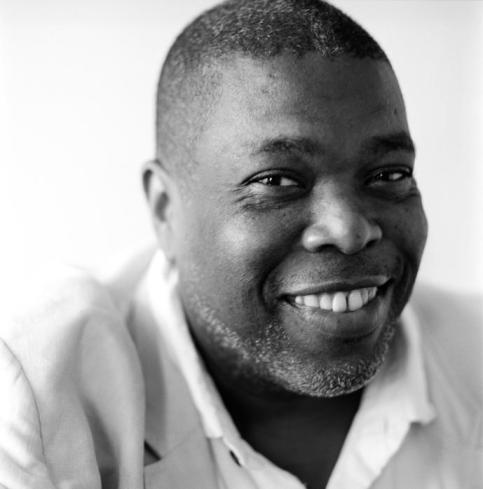
Charlie Murphy, the older brother of Eddie Murphy, a “Chappelle’s Show” star and an accomplished comedian in his own right, died Wednesday in New York City. He was 57. Murphy’s publicist confirmed the comedian’s death, and the cause of death was leukemia.
“We just lost one of the funniest most real brothers of all time. Charlie Murphy RIP,” Chris Rock, Murphy’s CB4 co-star, tweeted. “Charlie Murphy changed my life,” tweeted “Chappelle’s Show” co-creator Neal Brennan. “One of the most original people I’ve ever met. Hilarious dude. Habitual Line Stepper. So sad.”
After making his big screen debut in 1989’s “Harlem Nights,” directed by his younger brother Eddie, and appearing in bit roles in Spike Lee films like “Mo’ Better Blues” and “Jungle Fever,” Murphy’s big break came as a cast member on “Chappelle’s Show,” where “Charlie Murphy’s True Hollywood Stories” resulted in a pair of that series’ most memorable sketches.
Both sketches featured Murphy reminiscing about he and Eddie’s celebrity encounters in the Eighties, with Dave Chappelle portraying Rick James and Prince in the now-legendary sketches. Charlie Murphy also co-wrote “Vampire in Brooklyn,” another film directed by Eddie, as well as 2007’s “Norbit.”
Murphy also appeared in 1998’s “The Player’s Club,” directed by Ice Cube. The rapper paid tribute to Murphy on Twitter Wednesday, “Damn, sorry to hear about my friend Charlie Murphy. He took a chance on a young director in The Player’s Club. Always made me laugh. RIP.”
Growing up in the Bushwick area of Brooklyn, Charlie often stuck up for his younger brother; in defending Eddie, Charlie joked about fearing his mom’s wrath if bullies picked on Eddie more than the bullies themselves. That guardian role made Charlie a natural to serve as Eddie’s security guard as the comedian quickly ascended to stardom.
Due to Charlie’s propensity toward overreacting while guarding his brother – “Whoever say something, I almost gave this old man a heart attack on a plane because he asked us if we were a basketball team. I took that personally,” Murphy said in a Chappelle’s Show outtake – forced Murphy to embark on his own career.
One night at an Eddie Murphy stand-up performance, Charlie went after one heckler “who tried to squeeze the lemon.” “I took it as a personal crusade until they were like, ‘You’re a little overzealous in how you’re performing your job.’ So that’s how I ended up not doing [security] anymore,” Murphy said.
To read more, go to: Charlie Murphy, Comedian and ‘Chappelle’s Show’ Star, Dead at 57 – Rolling Stone
Posts published in “Entertainment”

article by Borys Kit via hollywoodreporter.com
Don Cheadle has acquired the film and TV rights to “Prince of Darkness: The Untold Story of Jeremiah G. Hamilton, Wall Street’s First Black Millionaire” by Shane White, with plans to adapt the 2015 book as a starring vehicle. Steven Baigelman, who worked with Cheadle on the Miles Davis biopic “Miles Ahead,” is reteaming with the actor and will write the script for the drama.
Cheadle will produce and star. “Prince of Darkness” sheds light on the obscure story of Hamilton, who was mentioned in an obituary for Cornelius Vanderbilt as the tycoon’s true rival. White’s book details the rise of Hamilton as he is chased out of Haiti and becomes a broker and land agent in 19th century New York, his success prickling both white and black society.
He broke many taboos of the times, including marrying a white woman and owning stock in rail companies on whose trains he wasn’t legally allowed to ride. When Hamilton died, obituaries at the time called him the richest black man in America. The book has been awarded the Society of Historians of the Early American Republic’s best book prize and the 2016 New York City Book Award.
To read more, go to: Don Cheadle Tackling Story of Wall Street’s First Black Millionaire (Exclusive) | Hollywood Reporter


Jordan Peele is the quiet superhero I’ve been waiting for. I say quiet because his movie “Get Out” sneaked up on me. Not that there wasn’t noise surrounding this film… there was… everyone was talking about it. It had a perfect positive review score on Rotten Tomatoes until one guy’s negative take ended the streak. What can I say… everyone’s a critic – including me.
To summarize, “Get Out” is about a young, black photographer named Chris who is dating a white girl named Rose, and the duo depart for the weekend to visit Rose’s family (the Armitages) at their sprawling, suburban estate. Chris has initial concerns about the trip because Rose never mentioned to her family that she was dating a black man; however, Rose assures Chris that her family is not racist, and he therefore should not have anything to worry about.
Upon arrival the family seems normal enough; they are progressive, nice, and even border on entertaining. But as the plot furthers and their racism becomes increasingly revealed, the movie transforms from a fish-out-of- water “meet the parents” story into a spine-chilling thriller involving blood, murder, and hypnotic enslavement.
This slogan, coined in 1972 by Arthur Fletcher, head of the United Negro College Fund, was important for two reasons: 1) it was created to promote the funding of scholarships for underprivileged black youth who would otherwise be unable to afford college and 2) it acknowledged that the potential of a mind does not hinge upon the race of its host, and that every mind should thereby be entitled to further cultivation.
What I find most interesting about Peele’s inclusion of this slogan (and its periodic repetition throughout the film and trailer) is that it perfectly echoes the commentary Peele makes about racism through this movie. Minds of black people are literally wasted as they are hypnotically enveloped within “The Sunken Place” – a darkness in which the mind is deprived of control over the body, and this imposed deprivation is largely representative of the systemic racism that plagues our society.
Although the capability of a mind is not dictated by race, the system has nonetheless created the illusion of white superiority by marginalizing black people and casting them into a void of shadows. And, while an occasional glimmer of reality (in this case, provided by the flash from Chris’s camera) may motivate black people to sometimes fight against it, the system ultimately triumphs in restoring its prejudiced order.
Speaking from my perspective – a bi-racial, brown-skinned teenager living in Los Angeles – I have been fortunate enough to not have personally experienced the same degree of marginalization as other members of the black community, or even within my own family. But this movie nonetheless still displays several facets of my experience. I attend a school of predominantly white students, and I can attribute many of my own feelings of being “other” to a feeling of being overshadowed by my white peers. I say many, and not all, because the alternative is a feeling of scrutinization that stems from being the only black kid in the room. Peele illustrates this aspect extremely well through the Armitages’ fixation on Chris. What I think therefore is so special about this film is that it weaves together these (and so many other) different dimensions of discrimination, and pretty much anyone of color can find some identification with Chris’s experience.
For those who still have not seen this movie, the purchase of that ticket would undoubtedly be money well-spent. If thought-provoking and intelligently constructed films intrigue you, watch “Get Out.” If films that tackle racism move you, watch “Get Out.” Even if you are merely into the horror genre, watch “Get Out.” From its amazing acting – Chris (Daniel Kaluyaa), Rose (Allison Williams), the brilliantly hilarious TSA agent Rod (Lil Rel Howery), etc. – to its perfect pacing, “Get Out” merits its commercial and critical success for its unique, alluring, and thoughtful portrayal of the underlying horrors that constitute being black in America.

article via newyorker.com
Hilton Als, the theatre critic for The New Yorker, has won the 2017 Pulitzer Prize for Criticism. Als became a staff writer for The New Yorker in 1994 and a theatre critic in 2002. Week after week, he brings to the magazine a rigorous, sharp, and lyrical perspective on acting, playwriting, and directing.
With his deep knowledge of the history of performance—not only in theatre but in dance, music, and visual art—he not only shows us how to view a production but how to place its director, its author, and its performers in the ongoing continuum of dramatic art. His reviews are not simply reviews; they are provocative contributions to the discourse on theatre, race, class, sexuality, and identity in America.
To see the ten pieces by Als, from 2016, that were part of the prize-winning submission to the Pulitzer committee, go to: Hilton Als Wins the Pulitzer Prize for Criticism – The New Yorker

article by Corey Kilgannon via nytimes.com
While a soulful organist welcomed church congregants last Sunday, the Rev. Nathaniel Dixon stood in his office in a natty pinstriped suit, looking more like a hip jazz musician about to hit the bandstand than a pastor preparing to take the pulpit.His office, in St. Stephen’s United Methodist Church in the Marble Hill section of Manhattan, bore signs of both Jesus and jazz. Its walls had framed photographs of Duke Ellington and Billie Holiday, and religious literature shared space with saxophones, keyboards and guitars.
After pulling on his white pastor’s robe, Mr. Dixon grabbed a box of saxophone reeds and his microphone.“ Edmar, let’s bring that tenor down, man,” he said to his assistant, Edmar Flores, who carried Mr. Dixon’s tenor saxophone to the sanctuary. As the service heated up, with his band backing him, Mr. Dixon picked up his horn and played from the pulpit.“My Lord, my God — you are my savior,” he sang, his voice swelling up to the church’s majestic rafters. Then he took up his saxophone.
The pastor’s playing style was spare and insistent, reminiscent of one of John Coltrane’s spiritual songs. “People who aren’t used to seeing a preacher playing the saxophone are surprised,” he said. “And when they see I can actually play, they’re more surprised.” As a young jazz musician, Mr. Dixon was seasoned in Harlem clubs, and played with the likes of the guitarist George Benson, the saxophonist Sam Rivers, the pianist Kenny Kirkland and the drummer Chico Hamilton.
Back then, he played bebop. Today, it is mostly GoJa, his name for a blend of gospel and jazz that swings with a spiritually uplifting message.Mr. Dixon said he tried to match one of his songs to his sermon every Sunday. Last Sunday, it was his composition “My Lord, My God,” a lyrical ode that recalls the spiritual style of the saxophonist Pharoah Sanders. The tune helped illustrate a point he was making about the Apostle Thomas’s reaction when called upon by Jesus.“I like Jesus because he calls you out,” Mr. Dixon said, before describing Thomas’s recognition of Jesus as his “eternal God.”“Somebody ought to clap right there,” he told the spare congregation, which included older women in ornate hats and ushers in white outfits.Applause went up and seemed to mingle with the morning sunlight filtering through the stained glass windows.
During the song, Mr. Dixon pointed to members of the band, directing each to perform a solo, then adding through the microphone, “Give the drummer some.”He told the congregation he wrote “My Lord, My God” while sitting in the church alone, “just me and the Lord.”“I like to doodle on the piano,” he said. “That’s where you get a chance to hear God speaking to you.”Mr. Dixon said he grew up in public housing in the Bronx and attended the High School of Music and Art in Manhattan. Struggling to land and keep gigs at jazz clubs in Harlem, like Smalls Paradise and Showman’s, taught him how to fend off other musicians looking to replace him.
“Just because Jesus said to turn the other cheek doesn’t mean you have to let people walk all over you,” he said.The saxophonist Stanley Turrentine taught him to play with no excuses, and the alto player Lou Donaldson helped him choose a better mouthpiece. Connecting with a jazz club audience helped prepare him to connect with a congregation, said Mr. Dixon, who worked nearly 30 years as a teacher and administrator in New York City public schools. At one middle school in the Bronx, he was allowed to keep a cot so he could head there after late-night gigs, he said.
Before retiring from teaching in 2005, he began studying for his ordination as a Methodist minister. He told the congregation on Sunday that he was “happy minding my own business, but God said, ‘I ain’t finished with you yet.’”His latest CD, “Made in New York City: Nat Dixon and Friends,” includes a version of “My Lord, My God,” with vocals by the Rev. Lori Hartman, daughter of the jazz singer Johnny Hartman and herself a pastor, at St. Paul United Methodist Church in Jamaica, Queens.
To read full article, go to: https://www.nytimes.com/2017/04/07/nyregion/preaching-the-gospel-jazz-riffs-and-all.html?em_pos=small&emc=edit_ur_20170409&nl=nytoday&nlid=58278902&ref=headline&_r=0
The 2017 ESSENCE Festival has announced the all-star, night-by-night schedule for its concert series, from June 30 to July 2 at the Superdome in New Orleans, LA.
Single-night tickets are now on sale and are priced starting at $50 per person per night.
The concerts will feature more than 40 acts across five stages in the Superdome throughout the weekend on the festival’s renowned Mainstage and in the intimate Superlounges. Festival first-timers Diana Ross and Chance the Rapper will open and close the weekend concert series with headlining performances on Friday and Sunday night respectively – along with a special all-female Saturday night lineup, inspired by headliner Mary J. Blige’s forthcoming album Strength of A Woman.
Other well-known performers in this year’s line-up include John Legend, india.arie, Jill Scott, Chaka Khan and Solange.
For more information about ticket sales and accommodations and for the latest news about the ESSENCE Festival®, visit www.essencefestival.com, join the festival community by following us on Twitter @essencefest #EssenceFest and become a fan of 2017 ESSENCE Festival® on Facebook.

article by Michael Fleming Jr. via deadline.com
In a remarkable pair of deals for a debut author who is just 23, Fox 2000 has just made a preemptive acquisition of Children of Blood and Bone, the first installment of a fantasy novel trilogy by Tomi Adeyemi that will spawn a trilogy.
Temple Hill’s Marty Bowen and Wyck Godfrey are producing with Karen Rosenfelt. Word is this deal landed at or near seven-figures, and so did a whopping publishing deal that just closed at Macmillan Children’s Publishing Group.
The novel is unusual in that the fantasy trilogies studios usually buy for big bucks are built around white characters. This one weaves in African culture and characters and mixes it with magic to create an intriguing mythology that is otherworldly but somehow familiar. It is being called a Black Lives Matter-inspired fantasy.
The protagonist is Zélie, who at six years old watched the king’s guards hang her mother on a tree outside her home. She never forgot it. In the beginning, every Orïshan was a magi: born with dark skin, stark white hair and the blessing of the god’s magic once they reached adulthood. Yet over time, their population dwindled and they became Orïsha’s minority. Magic became a thing to loathe, dark skin transformed into a thing to hate. Ten years after the raid that killed her mother and took away magic forever, Zélie Adebola has one chance to bring magic back. Through a fortuitous encounter with the Princess Amari, Zélie comes into possession of a sacred scroll necessary to restore a connection to the gods and secure magic for another hundred years. This sets the young women on a quest to end the senseless violence and oppression by the lighter-skinned royal class.
Danger lurks in this west-African inspired world, where lionnaires and cheetanaires roam, and the beautiful villages built over oceans, out of sand or forged in iron hide a dark underbelly of slavery and corruption. They find themselves pitted against a crown prince bent on wiping out magic for good.
Adeyemi is a Nigerian-American writer and creative writing coach based in San Diego, who graduated from Harvard before receiving a fellowship to study West African mythology and culture in Salvador, Brazil.
To read full article, go to: Fox 2000 Lands ‘Children Of Blood And Bone’ In Splashy Book Deal | Deadline

article by Beth J. Harpaz, AP via washingtonpost.com
An opera about Negro Leagues baseball star Josh Gibson, whose power hitting rivaled Babe Ruth’s, will have its world premiere in Pittsburgh this April. “The Summer King,” presented by Pittsburgh Opera, premieres April 29. Gibson’s story also figured in “Fences,” the movie starring Denzel Washington that was originally a play by Pittsburgh native August Wilson.
Baseball and opera “don’t usually inhabit the same universe,” said Christopher Hahn, Pittsburgh Opera’s general director. But opera is the perfect medium for telling Gibson’s story because opera allows people “to sing about emotions and aspirations and fears.”
Gibson was one of the first three Negro Leagues players to be inducted into the National Baseball Hall of Fame, which lists his career batting average as .350. He was twice named Negro National League batting champ and led the league in home runs three times. He played for two Pittsburgh teams, the Homestead Grays and the Crawfords.
Gibson died at 35, probably from a brain aneurysm, a few months before Jackie Robinson integrated baseball in 1947. Gibson’s story is “the story that came before Jackie Robinson,” says Daniel Sonenberg, composer of “The Summer King.” ‘’Josh’s career made the advent of Jackie Robinson possible. It was Josh who played at this high level that caught the attention of white owners. It was Josh who demonstrated it was competitive suicide not to integrate.”
But baseball’s integration led to the Negro Leagues’ shutdown, ending careers for dozens of black athletes who were not among the few chosen for white teams. Both “Fences” and “The Summer King” honor “a whole generation of wonderful players whose livelihoods and social structures got up-ended,” Hahn said.
“Most people know the story of Josh Gibson as a baseball player, a home run hitter compared to Babe Ruth with outstanding statistics, in the Hall of Fame,” Sean Gibson said. “But behind the uniform was a great man who lived through tragedy outside of dealing with racism and playing baseball: His wife died giving birth to their twins.”
The opera also portrays Gibson’s career playing abroad in Cuba, Mexico and elsewhere. “Over there they didn’t have to deal with racism,” said Sean Gibson. “You’re going over to Latin countries, your skin color is the same color as theirs.” Nearly all 14 principal roles in “The Summer King” are played by African-Americans, a rarity in operas (”Porgy and Bess” notwithstanding). Renowned mezzo-soprano Denyce Graves plays Gibson’s lover. Bass-baritone Alfred Walker, who plays Gibson, told the New Pittsburgh Courier that playing “someone that looks like me” is “an amazing opportunity.”
A ballfield named for Gibson is located in Pittsburgh’s Hill District neighborhood, not far from the August Wilson House, the late playwright’s childhood home. The August Wilson House hosts a block party April 29, starting at noon, just a few hours before the opera premiere, to mark Wilson’s birthday.
The Michigan Opera Theatre in Detroit plans to stage “The Summer King” in March 2018.
To read full article, go to: Opera tells story of Negro Leagues baseball star Josh Gibson – The Washington Post