

article by Hope Wabuke via theroot.com
It is no secret that “African-American women are the largest group of readers in the country,” states Dawn Davis, head of Simon & Schuster’s 37 Ink imprint. It is also no secret that the publishing world is very, very white, with books by black authors published at an abysmal low, never rising above 10 percent of the industry’s output. Indeed, a recent survey by Lee & Low publishers found that “just under 80 percent of publishing staff and review journal staff are white,” with “Black/African Americans [at] 3.5 percent.”
But even with such conditions, key figures such as Chris Jackson, Dawn Davis and others have shepherded books by black authors through their fellow gatekeepers and to the public. Other organizations, like Cave Canem, the Kimbilio Center for African American Fiction and the African Poetry Book Fund, support black literature by offering writing retreats, workshops and small-press publishing opportunities. Here are some of the wonderful titles by black authors that readers of all tastes can look forward to in 2016.
In fiction, Darryl Pinckney offers Black Deutschland, the story of a gay African-American man who escapes his troubles in Chicago to seek refuge in 1980s Germany. The Castle Cross the Magnet Carter, from playwright and TV writer Kia Corthron, is an ambitious, brilliantly executed tale of race and family across generations. There is also the latest installment of Rachel Howzell Hall’s Los Angeles-based Elouise Norton mystery thriller series, Trail of Echoes, which comes out in May.
Literary legend Terry McMillan publishes a new book in June titled I Almost Forgot About You, the story of Dr. Georgia Young, who one day decides that there’s more to life than what she has been doing—and decides to go find it. There is also The Underground Railroad, a novel from acclaimed author Colson Whitehead, which will be published in September. And in April, Diane McKinney-Whetstone is giving us Lazaretto, her fictional account of race, lies and murder that rock the close-knit community of the island-based Lazaretto quarantine hospital. In May, from Afro-Caribbean British writer Yvette Edwards, comes the riveting novel The Mother, which explores how one mother copes with the murder of her son—and the courtroom drama of the trial that follows.
Six strong fiction debuts from black American women are a high point of 2016. In June, Los Angeles-based writer Natashia Deon gives us Grace, a tale of the love between a mother and daughter set against American slavery and emancipation. Desiree Cooper’s Know the Mother, out in March, explores race and motherhood in a series of interconnected vignettes. Jamaican-American writer Nicole Y. Dennis-Benn crafts a tale of unforgettable Jamaican women fighting for selfhood and independence in Here Comes the Sun, due out in July.
Cole Lavalais pens a tale of love, redemption and self-discovery on the campus of a historically black college in Summer of the Cicadas due in the spring. In We Love You, Charlie Freeman, out next month, Kaitlyn Greenidge has created an absurdist social commentary on race in the form of an African-American family paid to adopt a chimpanzee as a member of their family and be observed by a scientific research institute during the process. And Fabienne Josaphat’s novel, Dancing in the Baron’s Shadow, is the riveting tale of a man trying to save his brother from unjust imprisonment during the brutal regime of Haitian dictator François Duvalier in 1965.
Nonfiction is equally strong. Memoirs from literary powerhouses Roxane Gay and Kiese Laymon, both meditating on blackness and the body, arrive in June. In Hunger: A Memoir of (My) Body, Gay discusses her relationship with food, body image and self-care, a memoir couched in her usual honesty, vulnerability and depth of observation that have endeared her to so many readers. Laymon’s memoir, titled Stank: A Fat Black Memoir, is replete with his trademark wit and astute analysis. Out now is All Jokes Aside, a memoir by Raymond Lambert and Chris Bournea, which explores the rise of the African-American comedy scene centered at Lambert’s club.
To read more, go to: http://www.theroot.com/articles/culture/2016/02/books_by_black_authors_to_look_forward_to_in_2016.html
Posts published in “Community”

article by Brittny Mejia via latimes.com
The city of Compton honored rapper Kendrick Lamar today by presenting him the key to the city. The ceremony honoring the Grammy Award winner who grew up in the city took place at 10 a.m. at the Martin Luther King Monument at Civic Center Plaza.
“Kendrick Lamar is a phenomenal artist whose work has served as a catalyst to raise a new level of consciousness for this generation,” said Compton Mayor Aja Brown in a statement. “His message challenges the status quo and motivates listeners to rethink our society’s institutions.”
Last year, Lamar wrote a love letter to Compton through his music video “King Kunta,” featuring the rapper and his friends dancing through his hometown. The key to the city is Compton’s reply to that letter.
Lamar attended Centennial High School as a teenager, where he was a straight-A student, according to city officials. Last year, he served as the 63rd grand marshal of the Compton Christmas Parade. The “Kunta” video was filled with scenes from the city, including the Compton Swap Meet, also known as the Compton Fashion Center.
“Kendrick Lamar is one of Compton’s greatest ambassadors,” said City Councilwoman Janna Zurita. “We in Compton are proud of him because he is a symbol of what our city really is — a place where dreams can come true.”
[youtube https://www.youtube.com/watch?v=hRK7PVJFbS8&w=560&h=315]

article by Jeremy Fox via bostonglobe.com
Wellesley College announced Thursday it had appointed Dr. Paula A. Johnson, a Harvard Medical School professor and advocate for women’s health, as its president, making her the first African-American to lead the school.
Johnson will become the 14th president of the women’s liberal arts college in July. She replaces H. Kim Bottomly, who said in April she would step down after nine years.
Johnson, 56, said in an interview that she felt a special responsibility as the college’s first African-American leader and believes that student diversity is one of Wellesley’s strengths.
She said she would work “to not only strengthen and deepen that diversity, but also ensure that our residential experience is taking full advantage of that diversity, that our young women are really experiencing all the richness that that diversity brings on campus.”
Wellesley graduated its first African-American student in 1887. In 2014-2015, the most recent academic year for which data are available, the student population was 5 percent black, 9 percent Hispanic, 22 percent Asian, and 6 percent biracial or multiracial. Another 12 percent were international students.
On campus Thursday, the appointment resonated with sophomore Gabrielle Taylor.
“For someone who looks like me, a black woman, to become president of Wellesley College — it is so inspiring to me. She truly embodies black excellence,” said Taylor.
Johnson said that Wellesley has important work to do in preparing students for both the great expansion of leadership opportunities for women and the ongoing disparities in women’s employment and health care options.
“Wellesley could not be more relevant today in terms of its role in providing an outstanding liberal arts education, which we know is so critical to developing the next generation and to the future of our world,” she said.
A committee of students, alumnae, trustees, faculty, and staff unanimously recommended Johnson after an eight-month search.
“Even among a superb group of candidates, Dr. Johnson stood out through her record as a scholar and leader, together with her passion for women’s advancement, education, and well-being, the energy and insights she conveyed in our discussions, and her enthusiasm for Wellesley,” Debora de Hoyos, chairwoman of the search committee and a college trustee, said in a statement.
Johnson is the former chairwoman of the Boston Public Health Commission, a professor at the Harvard T.H. Chan School of Public Health, and a physician at Brigham and Women’s Hospital.
She attended Harvard and Radcliffe colleges and trained in internal and cardiovascular medicine at Brigham and Women’s. She is the daughter-in-law of a Wellesley alumna and lives with her husband and two children in Brookline.
She currently serves as the chief of the Division of Women’s Health at Brigham and Women’s and is founder and executive director of the hospital’s Mary Horrigan Connors Center for Women’s Health & Gender Biology.
Johnson’s work has focused in part on biological differences between women and men, seeking to correct a longstanding imbalance in medical research that looked only at men, she said.
“Dr. Johnson has devoted her life to improving the lives of women,” said Charlotte Harris, a Wellesley senior who served on the search committee, in a statement. “She truly understands the issues of equity, inclusion, and well-being that are so important to Wellesley students.”
The women’s college west of Boston has about 2,400 students and counts former secretaries of state Hillary Clinton and Madeleine Albright among its graduates. Johnson said many Wellesley students support Clinton’s presidential campaign.
“There’s a tremendous excitement around the possibility of seeing a woman be next president,” she said. “It’s about leadership, and that leadership reflecting back at you and giving you a sense of pride and hope for what is possible.”
Wellesley made headlines last year when it announced it would begin accepting transgender women in the Class of 2020, following similar policy changes at women’s colleges such as Mount Holyoke in South Hadley and Simmons in Boston’s Fenway neighborhood.
Johnson said it was a policy change that students, alumni, and the college leadership had embraced.
“The mission of Wellesley is to educate women, and women who will make a difference in the world,” she said, “and I think that embracing transgender women is part of our mission.”
Dina Rudick of the Globe staff contributed to this report.

article by Ny MaGee via eurweb.com
Def Jam co-founder Russell Simmons has announced that he’s launching his own movie awards show in response to #OscarsSoWhite, which is set to debut just four days before the Academy Awards.
As the A.V. Club reports, Simmons’ All Def Movie Awards “will see “Beasts of No Nation,” “Chi-Raq,” “Concussion,” “Creed,” “Dope,” and “Straight Outta Compton” compete for the best picture award.” Other awards will honor Best Actor, Best Actress and Best Director, as well as Best Bad Muh F**ka, Best Helpful White Person and Best Black Survivor in a Movie.
The awards will be recognized by members of the All Def Academy, and members of the public can vote online for two categories – Best Picture and Most Quoted Movie – through midnight on Feb. 23 by clicking here.
“The All Def Movie Awards are not the Black Oscars,” Simmons said in a statement, “But they could be. This will be a fun, entertaining and hopefully thought-provoking celebration of the uncelebrated.”
The ceremony is set for February 24 in Hollywood at the Mann’s Chinese theater. Tony Rock, (Chris Rock’s younger brother), will host the event, which will feature a Black Carpet for celebrity presenters, arrivals and VIP guests.
“If you want something done right, you have to do it yourself,” said Rock. “With that in mind I have teamed up — I guess I didn’t do it myself — with ADD to bring you the ‘all inclusive’ All Def Movie Awards. We’ll honor the entire movie-making process. Great acting, mediocre acting as well as horrible acting. Soundtracks. Wardrobes. Maybe even craft services — the best part of the set. This is the award show Hollywood has been waiting for.”
The All Def Movie Awards will be programmed as part of All Def Comedy Live, and admission to the show is by invitation only, with a select number of seats on reserved for fans by lottery.
“I don’t expect a 90 year-old Academy member to see ‘Straight Outta Compton’ or vote for it. I’m more concerned that in 2016 there continues to be a stunning lack of diversity in the studios, in the green light process, in the decisions of what films and television series get made, and what actors get chosen. This needs to be addressed institutionally,” said Russell Simmons.
According to The Wrap, the All Def Movie Awards will also feature a special live musical performance and a steady stream of “video content before, during and after the show on all of ADD’s social channels, including Facebook, YouTube, Snapchat and Periscope.”
Read more at http://www.eurweb.com/2016/02/russell-simmons-announces-def-movie-awards/#feSMvh5rzfEkCzBY.99

article by Zon D’Amour via hellobeautiful.com
Where can we make an appointment to get our hair done by 8-year-old Lauren Laray? The 3rd grader has a remarkable talent for doing hair and she’s putting her skills towards an excellent cause.
After learning that her best friend’s little sister had cancer and was losing her hair to chemotherapy, Lauren decided to make her a wig. She now wants to help even more little girls feel beautiful while they fight to overcome one of the most difficult times in their lives.
Initially, Lauren was going to make 10 wigs but by the summer, she hopes to finish 30 wigs that will be donated to the Nevada Childhood Cancer Foundation.
“Some of them will be blonde; some of them will be redheaded for redheaded little girls. I’ll have a whole bunch because other girls have other styles for their hair”, said Lauren.
Lauren has launched a GoFundMe page where she’s already exceeded the $900 needed to make the 30 wigs which costs $30 per head for supplies. The Las Vegas native uses a crochet needle, weave cap, two packs of hair and a bow.
“I won’t need a thank you, I’ll just see a smile on their face and I’ll be happy,” said Lauren. To see her demonstrate how to make a wig, watch below:
[youtube https://www.youtube.com/watch?v=rK__Cy_l9ws&w=420&h=315]

article by MSR Online via spokesman-recorder.com
U.S. Senators Amy Klobuchar and Al Franken announced that the Senate voted to confirm the nomination of Wilhelmina “Mimi” Wright as a U.S. District Court Judge for the District of Minnesota. Currently serving on the Minnesota Supreme Court, Wright has over 25 years of legal experience and has served at all levels in the Minnesota courts system.
Wright was recommended to the senators by a bipartisan judicial selection advisory committee. Klobuchar and Franken formed the bipartisan advisory committee to review candidates and assist them in making a recommendation for the position. The Senate only confirmed 10 District Court Judges in 2015, making this confirmation a major bipartisan victory.
“The confirmation of Mimi Wright to be Federal District Court Judge is a major victory for Minnesota,” Klobuchar said. “She is a dedicated public servant with a distinguished career spanning all levels of the state and federal legal system. I fought hard for her confirmation, and I have no doubt she will serve Minnesota well.
“While many judicial nominees are languishing in the Senate, she has made it through the confirmation gauntlet. That is a tribute to her and those who supported her. I thank the Democratic and Republican Senators that voted for her after examining her record and seeing her strength and fairness during the hearing.”
Wright was appointed to the Minnesota Supreme Court in 2012. She previously served on the Minnesota Court of Appeals from 2002-2012. Prior to this appointment, she served as a trial judge on the Ramsey County District Court.
Before joining the bench, Wright was an assistant U.S. attorney for the District of Minnesota, where she represented the United States in complex economic fraud cases and violent crime cases. During her time as a federal prosecutor, she received the United States Department of Justice Director’s Award and the United States Department of Justice Special Achievement Award.
Before joining the U.S. Attorney’s office, Wright practiced with Hogan & Hartson, LLP in Washington, D.C. She received her Bachelor of Arts from Yale University in 1986 and her Juris Doctorate from Harvard Law School in 1989.
article by Stephan A. Crockett, Jr. via theroot.com
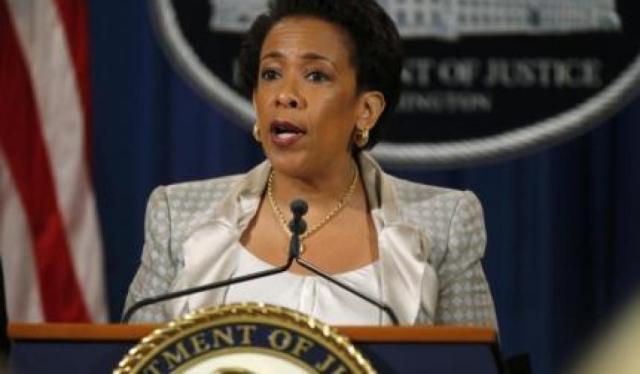
U.S. Attorney General Loretta Lynch announced Wednesday that the Department of Justice has filed a federal lawsuit against Ferguson, Mo., after the City Council voted Tuesday to change the terms of a deal that would have brought sweeping changes to the city’s embattled Police Department.
“The residents of Ferguson have waited nearly a year for their city to adopt an agreement that would protect their rights and keep them safe,” Lynch said, according to ABC News. “They have waited nearly a year for their Police Department to accept rules that would ensure their constitutional rights. … They have waited decades for justice. They should not be forced to wait any longer.”
The Justice Department launched an investigation into the Ferguson Police Department last year after the shooting of unarmed teen Michael Brown by Police Officer Darren Wilson in August 2014. Wilson was not charged in the shooting, but the Justice Department investigation found “systemic and systematic racial bias within the force’s policing practices,” ABC reports.
The findings of the investigation were announced last year, and the city of Ferguson and the Justice Department began negotiations that ABC notes lasted 26 weeks, seeking an agreement that would address the Justice Department’s findings.
In January it was announced that the two sides had reached a tentative agreement that was set to include a complete overhaul of basic policing practices, including “how officers conduct stops, searches and arrests, use their firearms and respond to demonstrations,” among other significant changes, the Associated Press reports.
ABC notes that Ferguson leaders, however, had always balked at the tentative agreement, which they estimated would cost the city $3.7 million during the first year alone.

article by Robin White Goode via blackenterprise.com
For Black History Month, we are honoring pioneers and their heirs apparent.
There are so many black pioneers in the arena of education, but one who stands out is Charlotte Forten Grimké, who was born into an affluent family that had fought for racial equality for generations.
THEN
Charlotte Forten Grimké (1837-1914)
Charlotte Forten Grimké was the first northern African American schoolteacher to go south to teach former slaves.
Grimké was born in Philadelphia in 1837 into an influential and affluent family. Her grandfather had been an enormously successful businessman and significant voice in the abolitionist movement. The family moved in the same circles as William Lloyd Garrison and John Greenleaf Whittier: intellectual and political activity were part of the air Charlotte Forten Grimké breathed.
She attended Normal School in Salem, Massachusetts, and began her teaching career in the Salem schools, the first African American ever hired. But she longed to be part of a larger cause, and with the coming of the Civil War Grimké found a way to act on her deepest beliefs. In 1862, she arrived on St. Helena Island, South Carolina, where she worked with Laura Towne.
As she began teaching, she found that many of her pupils spoke only Gullah and were unfamiliar with the routines of school. Though she yearned to feel a bond with the islanders, her temperament, upbringing and education set her apart, and she found she had more in common with the white abolitionists there. Under physical and emotional stress, Grimke, who was always frail, grew ill and left St. Helena after two years.
Today, Grimké is best remembered for her diaries. From 1854-64 and 1885-92, she recorded the life of an intelligent, cultured, romantic woman who read and wrote poetry, attended lectures, worked, and took part in the largest social movement of her time. She was determined to embody the intellectual potential of all black people. She set a course of philosophical exploration, social sophistication, cultural achievement and spiritual improvement. She was, above all, dedicated to social justice.
NOW

John B. King Jr. (Image: Wikipedia.org)
John B. King Jr., (1975–)
John King Jr. is the first person of African American and Hispanic descent to be appointed Acting Secretary of the Department of Education. Previously he was Acting Deputy Secretary, and before that, the first African American and first Puerto Rican to be appointed Commissioner of Education of the State of New York.
Before King assumed these high-profile leadership roles, he was an award-winning teacher, receiving the James Madison Memorial Fellowship for secondary-level teaching of American history, American government, and social studies. He also co-founded a high-performing charter school in Boston, the Roxbury Preparatory Charter School.
King received a B.A. in government from Harvard, a Juris Doctor from Yale, and a Ph.D. in educational administrative practice from Columbia University Teachers College.
Although King was born into a well-educated and accomplished family (his father was the first black principal in Brooklyn, New York; he later became executive deputy superintendent of schools; his grandfather had attended New York University Law School), he experienced devastating loss and instability as a youngster, losing both his parents by the time he was 12. Seeing school and teachers as an anchor, he himself became a teacher and education leader, perhaps living out the potential that Charlotte Forten Grimké foresaw for all people of African descent more than a hundred years earlier.

article by Lori Lakin Hutcherson (@lakinhutcherson)
Twenty-five young African leaders will leverage the world leadership of the University of California, Davis, in zero-net energy and its global experience to tackle energy challenges in their countries.
They will come to UC Davis for the first and only energy-themed institute offered through the Mandela Washington Fellowship, the flagship of President Obama’s Young African Leaders Initiative.
The U.S. State Department and IREX, the international nonprofit that administers the fellowship program, today (Feb. 9) announced the 36 universities that will host six-week summer programs — also in business and entrepreneurship, civic leadership and public management — for about 1,000 fellows.
UC Davis Chancellor Linda P.B. Katehi said one of the 21st century’s biggest challenges is transitioning to a sustainable energy future, and UC Davis is leading with research, education and outreach in energy sciences, technology, management and policy to develop solutions.
“The fellows are future leaders in Africa,” she added, “and UC Davis is partnering with them to make a difference in our communities, our countries and our world.”
Selected from countries in sub-Saharan Africa through a competition, the fellows are 25- to 35-year-olds who already have a record of leadership and accomplishments.
U.S. Rep. John Garamendi was a Peace Corps volunteer in Ethiopia and has led two peace mission teams to Africa. “I congratulate these young leaders from Africa for their participation in the Mandela Washington Fellowship Program, as well as their dedication to improving the energy future of their countries and the world,” he said. “I am also very proud of the University of California, Davis, for the global leadership it is showing by hosting this unique and important institute for the Mandela program.”
Expertise from campus and beyond
Institute seminars and lectures will draw on the expertise of faculty from a broad range of disciplines and some dozen UC Davis institutes and research centers — including the Energy Efficiency Center, which accelerates the development and commercialization of energy efficiency technologies, and the Institute of Transportation Studies, the world’s leading university center on sustainable transportation.
Field trips and guest lectures will expose the fellows to key energy organizations and leaders in the generation and use of renewable energy.
In hands-on service and learning, the fellows will help install solar energy systems for lower-income families, clean up a local watershed, perform campus energy audits, and work on a community garden.
‘Brilliant, energetic and fearless’
The fellows are 25- to 35-year-olds who have promoted innovation and accomplished positive change in their organizations, institutions, communities and countries. They have made a commitment to return to Africa and apply their leadership skills and training to benefit their community or country.
The fellows will be selected this spring, and the institute will be held in June and July. To learn more about the program and how to apply, go to: Mandela Washington Fellowship

article by Maureen Ryan via Variety.com
The Feb. 24 episode of ABC’s “Black-ish” will take on police brutality. The episode, titled “Hope,” will revolve around a fictional incident of police brutality that Rainbow (Tracee Ellis Ross) and Andre “Dre” Johnson (Anthony Anderson) discuss with family members, including the couple’s four children. Much of the episode will focus on various characters’ reactions as they watch a news broadcast about the case, which involves an African-American teenager’s encounter with police.
As was the case when the family talked about the issue of guns in the home, members of the Johnson clan do not necessarily see eye-to-eye about what the kids should know and when they should know it. Rainbow would like to shield the kids, especially the younger ones, from life’s harsher realities as long as she can, while Andre feels that they need to know about the challenges of the world they’re living in as soon as is practical. Pops (Laurence Fishburne) and Ruby (Jenifer Lewis) tend to side with Dre, but the conversations are wide-ranging and impassioned on all sides. “Unfortunately the things that we are dealing with in this episode are not new, especially to the black and brown community. It’s something that’s been going on for quite some time,” Anderson told Variety.
Creator and executive producer Kenya Barris said the desire to take on the issue came from his own attempts to talk to his kids about various incidents of police brutality that made the news. “We’re not ‘Law & Order’ — we’re not trying to rip things from the headlines,” Barris said.
Bow and Dre talking to their kids about what they see on the news “is what this family would naturally be going through.”“What we’re really taking on is the notion of, how do you talk to your kids about what they’re seeing?’” Barris added. His own kids “were seeing people in the streets mad. And they were like, ‘What’s going on? Why are these people so angry?’ It was this big division at my house, because I had my feelings that I wanted to spout out. But my wife had her feelings and the biggest thing is, how do you talk about your frustrations and your angers, but at the same time not take away your kids’ hope and ability to still want to grow and thrive within a world that they have to live in?”
To read more, go to: http://variety.com/2016/tv/news/black-ish-police-brutality-episode-hope-1201699693/